Archives for category: Uncategorized

Apache Blessing

https://www.facebook.com/ShadowOfTheWolfNativeWisdomPoemsOfTheHeart

First, let me clarify that the above photo and blessing is from  Shadow of The Wolf Native Wisdom Poems of The Heart (see link above); they have my gratitude for publishing this on Face book (accessed 6/19/13), and I hope they don’t  mind me sharing it on this blog.

I don’t know about you, but just reading the “Apache Blessing” relaxes me. This is, for me, an excellent example of the type of prayer a recent blog discussed—-the type that is based deep within one’s soul and leads to faith, hope, and the gift of loving oneself as discussed by Rohr (The Naked Now, 2009).

When I read the words in this blessing, my thoughts are stilled as they drift into that “quiet, sacred place” inside my soul where it is easy to realize God/Creator/Great Spirit is all around me and in me because I am part of the Great Spirit’s  creation. If Great Spirit/God is all around me as the essential ingredient of all creation, then most assuredly, Great Spirit/God is within me because I am part of that creation.

If I can hold on to this perspective it is much easier to few others I meet as infused with Great Spirit also whether they are aware of it or not. What is important is that I am aware of it and, consequently, treat them with respect, kindness, and compassion. This belief is supported by one of my favorite bible passages from Matthew 25:40 (NLT): “I assure you, when you did it to one of the lest of these my brothers and sisters, you were doing it to me!” This philosophy guides me to see everyone as a vessel of God/Creator/Great Spirit; it does not always keep me from being self-centered and blind to another’s need. However, as I spiritually evolve, more and more often I am able to view everyone as containing some aspect of “God within.” Thankfully, it also allows me to see “God within” myself so it is easier to accept and love myself more  often also. Thus, I am blessed to “walk gently through the world and know its beauty” one day at a time.

Please share your thoughts about “walking gently through the world.” God bless and keep you.

stockimage photo

Image courtesy of stockimages / FreeDigitalPhotos.net

Honoring the Child Within

According to Luke 18: 16-17 (NIV), Jesus once said, “Let the little children come to me, and do not hinder them, for the kingdom of God belongs to such as these. I tell you the truth, anyone who will not receive the kingdom of Good like a child will never enter it.”

Childlike trust and faith is important for connecting with one’s inner spirituality.  According to The Life Recovery Bible (1998, p. 1236), “childlike faith is itself a gift from God that may take time for him to restore in us, especially if we have been abused (spiritually, emotionally, sexually, or physically). In recovery we are told to keep it simple; a simple faith in an almighty God is necessary for a successful recovery.”

I would like to believe the part about past abuse being a problem for those of us in recovery is not true. However, I know it is for myself and many others I have worked with over the years. Many of us have turned to addictions to numb the hurt and pain inflicted upon us in early childhood. The soul-centered wound  from such abuse remains with us once we enter recovery, and it can lead us back into our addictions if we are not careful. It takes hard work, sometimes for years and decades, before this wound can begin to heal.

My own healing process is a direct result of the spiritual journey I have pursued. Yes, counseling helped. However, insight was not enough. It took being like a child and truly trusting my Higher Power within the context of silent centering prayer to be given the gift of real healing. During one session of centering prayer my Higher Power gave me the gift of talking to and forgiving the person who sexually molested me when I was four years old.  At the time this occurred,  the person who had molested me had been dead for over fifty years and I had already been in recovery for approximately thirty years. I am convinced a firm foundation  in 12 step recovery is what set the stage for me to trust enough to finally receive this gift of healing.

In closing, I would like to share a meditation written by S.C. ( 1978, Help for Helpers: Daily Meditations for Those Who Care, the page for July 17):

“The little child in each of us never stops needing rainbows and hugs.

Our little child needs a safe person to sit near when tears come.

Our little child needs to believe there are no secrets too bad to be told, and no rooms too dark to enter.

Our little child needs to know love won’t be withheld.

Our little child needs to feel there’s a path she was created to walk on.

Our little child needs to believe he can make no mistake too bad for God to fix.

No matter how old we get, that little child lives on in our tenderest part. Remind us to clap and dance when we see a rainbow. Today, I will take time to honor the child in me.”

Comments are welcomed.

May you experience rainbows and childlike faith in your spiritual journey. God Bless and keep you.

hand

Image courtesy of Salvatore Vuono / FreeDigitalPhotos.net

People around 12 step tables often discuss the topic of making amends, one of the steps suggested for attaining and maintaining recovery. What is this amend process? Consensus seems to be it is much more than identifying your mistakes and saying, “I’m sorry” to the person harmed by one’s behavior. Most people around the tables would agree that real amends consist of recognizing and owning your responsibility, apologizing for your behavior that contributed to  the problem in question, and then changing your behavior accordingly so that the same mistake is not repeated. Thus, making amends has to do with being responsible and performing what is called “living amends”—– amends made with sincere and observable long-term behavioral change. In other words,  “living amends” are made by exhibiting positive and sustained change.

This works well when making amends to known persons that are accessible to the recovering person, but what about making amends to unknown victims that may have been hurt when the recovering person was practicing his or her addiction? People enmeshed in addictive behavior are often not aware of harming or offending others…..or, if they are aware, they often do not care and are later unable to remember what occurred during their last drinking or drugging episode. Likewise, people in recovery sometimes need to make amends to people who have already died or those who cannot be accessed for other valid reasons.  How can amends be made in situations like these?

One method, particularly useful for those who have died or who are inaccessible for other valid reasons, is to write a letter to the harmed person and then read the letter “to the person” even thought they are not, in actuality, present. After completing this, some individuals like to burn the letter so the amend rises to the heavens and is in the hands of their Higher Power. This method can be effective if the recovering person sustains behavioral changes that will prevent a re-occurrence of similar problems.

However, making amends to the “invisible victim” of addictive behavior is bit harder. When one is high, intoxicated, or in a blackout  there are whole blocks of time and behavior unknown to the offending person. I have known people who are in recovery for decades before they start to comprehend some of the “invisible victims” they may have harmed. For example, if while driving intoxicated, a person damages another car in a parking lot, laughs, and quickly leaves the scene to avoid “getting caught”–how can amends for that offense be made? How can amends be made to the hundreds of lives endangered by decisions made to drive while under the influence of alcohol or other drugs—-even if a motor vehicle accident did not occur as a result? What if you are with a group of people at a party in a high-rise apartment building and you and other “mind-altered” individuals decide it is fun to drop jack-o-lanterns off the balcony onto the traffic below?  Just because the police did not come knocking at the door does not mean someone was not harmed.

I don’t claim to know the answers for everyone in recovery, but I know how I have made amends to invisible victims through the years. I have had to first recognize my responsibility in putting another human being at risk, even if I was unaware of it at the time. Next, I needed to ask my Higher Power to forgive the harm my behavior caused or may have caused. Finally, and perhaps most importantly, I needed to make a conscientious effort not to repeat behaviors that would again put others at risk of harm. Once I took these steps, I was, with God’s help, able to forgive myself and complete one more important link in my spiritual journey.

Please comment on your ideas about making amends to invisible victims. I look forward to reading what you have to say. May God bless and keep you.

weather-satellite

<a href=”http://www.copyright-free-images.com/space-copyright-free-images/weather-satellite.jpg.html&#8221; title=”Weather satellite”>Weather satellite</a> by Greg Goebel

If My  Mind Was a Computer

Dr.  Paul O. (1995, There’s More to Quitting Drinking than Quitting Drinking)  wrote about what it would be like if his brain was a computer. He thought it would be nice to control his thinking because it controls who he is and his life in general. He further explained , “My mind has a defective toggle switch. It indiscriminately turns itself on and off, thinks when it should be resting, rests when it should be thinking, and thinks about things it should ignore” (p. 42). He fantasized how nice it would be to have a delete button and,  better yet, an option for “Control+Alt+Delete” (p. 43) to control his thoughts so his  mind could start over as needed.

Computers have come a long way since 1995. Today, I would like to build on Dr. Paul O’s fantasy. What if our mind would automatically copy, cut, paste, post on Face Book and Twitter,  and connect electronically with cell phones, lap tops, tablets and all those overhead satellites that are doomed to wear out? Scary thought. Google would have access to all our thoughts. Microsoft and Apple would have the potential for mass control of the human race. That means Big Brother would also be able to access and  control our thoughts. Come to think of it, our thoughts would be pretty much open to the public. There would be even less privacy and self-determination than we think we currently have. Besides that, if my thinking shut down every time I was confused, I’d be in trouble because it would be re-booting 24/7.

So, what does this have to do with recovery and spirituality? I believe the importance of making choices and being responsible for doing so  is a basic spiritual principle. Otherwise, how would I be different from a computer? Where would my soul be? How could God’s spirit be programmed into everything? Some things are just not meant to be based on computer programming. It is vitally important to receive and share God’s love, and, were I unable to choose to do so, then I would be closer to being a machine than a human soul created by God. I would not have the privilege of being caught up in the magic dance of life and spiritual growth.

Please comment. Thank you, and God bless and keep you.

Please be patient in this next week or so as I will be unable to respond to comments right away. Also, Facebook’s  reminder’s and link to the blog will not be posted. However, this blog will still be posted daily at 8 AM, so please remember to visit and comment at your convenience. Thanks!


orion-nebula-space-galaxy_sacred space

<a href=”http://www.copyright-free-images.com/space-copyright-free-images/orion-nebula-space-galaxy.jpg.html&#8221; title=”Orion nebula space galaxy”>Orion nebula space galaxy</a> on <a href=”http://www.copyright-free-images.com&#8221; title=”Copyright Free Images”>Copyright Free Images</a>

Dr. Paul O. (There’s More to Quitting Drinking than Quitting Drinking, 1995, p. 51) contrasted  what he called the noisy chatter of constant thoughts in his consciousness with what he called a Center of Calm:  “In contrast to the surrounding noise in the deepest part of me, in the last place I would have thought to look, I’ve discovered a Center of Calm, an area of peace, joy and serenity. My Higher Power resides there. He always has, but I didn’t know it.”

Thomas Keating quoted something similar in his book, The Daily Reader for Contemplative Living (2005, p,5)—-from a book he wrote in 1986 (Open Mind, Open Heart): “The spiritual journey does not require going anywhere because God is already with us and in us. It is a question of allowing our ordinary  thoughts to recede into the background and to float along the river of consciousness without our noticing them…. .”

I find it interesting that two writers (one a doctor and one a priest) both came to essentially the same conclusion—-that God is within us and we need to quiet our thoughts and heighten our inner awareness to connect with him.  When I read their published works, what they had to say resonated with what my own soul has found to be true.

I believe that God is within me and within all of creation. I am learning that it is within the context of silence, in what I like to think of as my interior “sacred space,” where I can most  effectively encounter this “God presence.”  If I try to quiet my thoughts and/or ignore their clamor and just “be here now”  I can discover God is “here now” with me, where he has been all along. It sounds deceptively simple, but it is not, at least for me. It is almost impossible for me to quiet my thoughts, but I am getting a bit better at ignoring them.  I am glad there are no “rules” about the “correct” way to do it. I am glad that that willingness and openness lay the foundation for making spiritual progress in this area, because my recovery program has already introduced those concepts to me.

This discovery of the God presence within my sacred space has another important implication for my spiritual journey. It means that God is present in every human being—–and that part of each human being unites us all  as part of God. It makes it easier to “do unto others as you would do unto yourself.”

Enough of my spiritual meanderings. I hope some of them made sense. I look forward to your comments. May God bless and keep you.

Please be patient in this next week or so as I will be unable to respond to comments right away. Also, Facebook’s  reminder’s and link to the blog will not be posted. However, this blog will still be posted daily at 8 AM, so please remember to visit and comment at your convenience. Thanks!


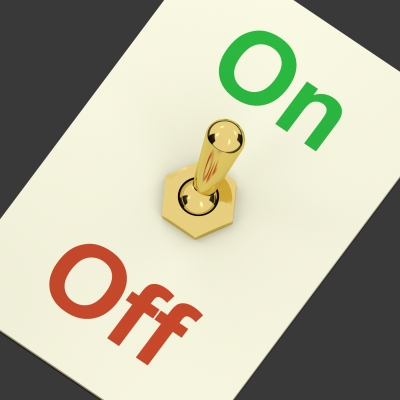
on off switch

Image courtesy of Stuart Miles / FreeDigitalPhotos.net

The other day I was looking at a meditative reading that talked about how each of us is responsible for our actions but not associated outcomes (Casey, K. , 1982, Each Day a New Beginning). Perhaps this over-simplifies things, but I cannot help but wish I had always known that. I have spent countless hours trying to control outcomes, and I was never ever able to attain some semblance of serenity until I realized that in my program of recovery God was responsible for outcomes as long as I took the next right action. Granted, no action can be an action that creates outcomes, sometimes unwanted ones, but procrastination will have to be a topic for another day.

Someone once explained this to me in terms of viewing one’s higher power as a source of energy that has to be set in motion by us “flipping the on switch.”  Perhaps this representation of electricity being similar to God has merit. I have to take the action of either walking to the switch or pushing the remote control button to turn the switch on in order for God/electricity to flow and cause outcomes. Staying in this metaphor, the scientific concept of conductivity  could represent the power of prayer. My faith that the action will have the desired result  motivates me to turn on the switch—-signifying  I need to seek and accept God’s help if I want my recovery journey to proceed.

Other authors have looked at the concepts of effort and outcome. One author ( O., 1995, There’s More to Quitting Drinking than Quitting Drinking) discusses his working relationship with his God as follows, “The net effect of my partnership arrangement with God is that He and I are now co-creators of my day. I determine my attitude; He determines reality and the outcome of my actions. Together these determine the kind of day I have” (p. 158).

I like what these two authors have to say. I need to be reminded that I am not responsible for outcomes. I also need to be reminded I can’t just sit on my over-sized posterior and wait for things to magically happen. I absolutely have to work in partnership with God to determine the reality I experience.

Enough. Hope to hear your ideas about the concepts of actions and outcomes as they relate to a spiritual path of recovery. God bless and keep you.

Please be patient in this next week or so as I will be unable to respond to comments right away. Also, Facebook’s  reminder’s and link to the blog will not be posted. However, this blog will still be posted daily at 8 AM, so please remember to visit and comment at your convenience. Thanks!

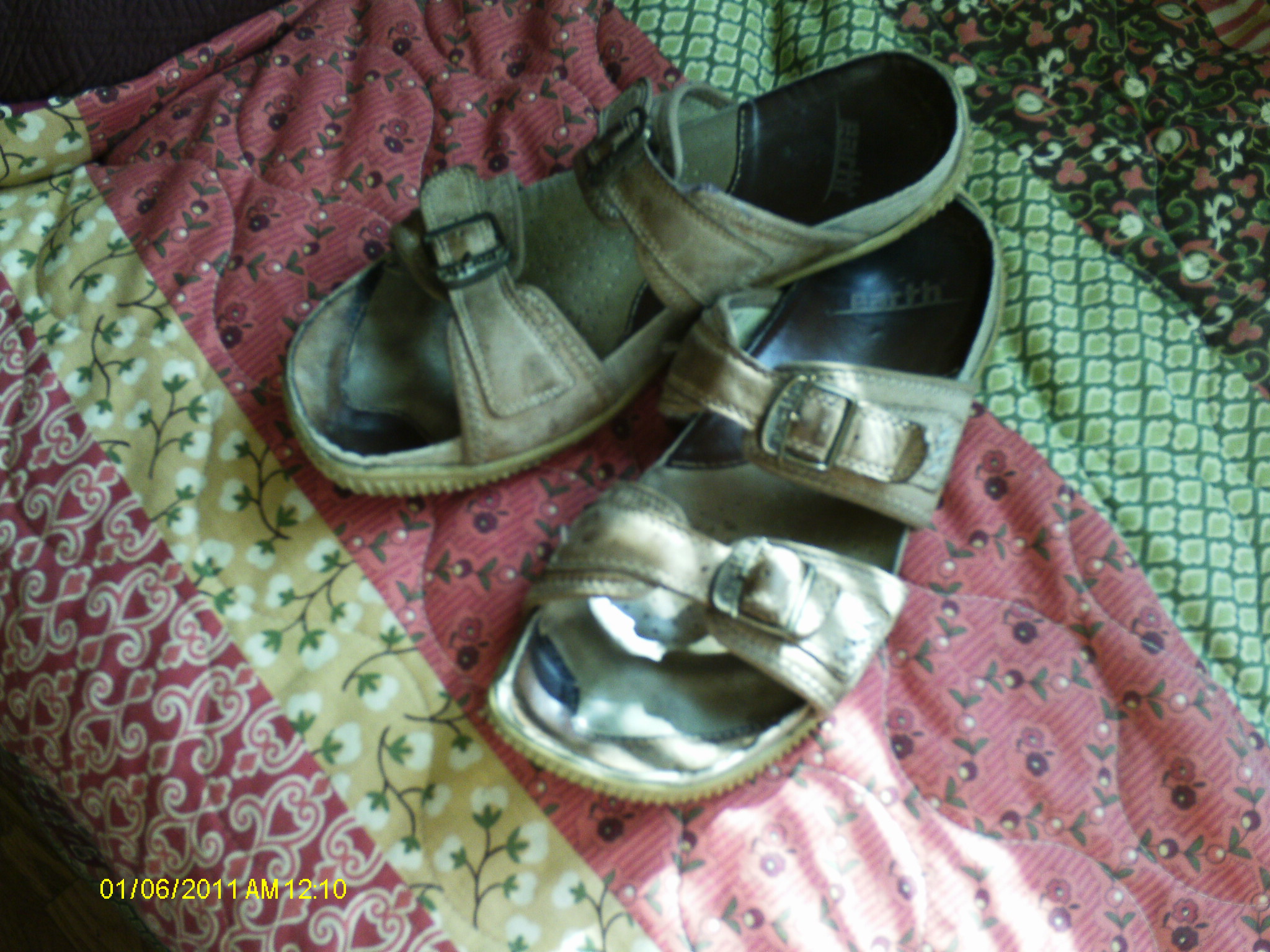
shoes

I don’t hear the word detachment used very often anymore in addictions treatment or when talking with those in recovery. Detachment  was a term taught to me in the late 1960s, and it is a concept, like many from that era, that can and need to be applied still today.

To me, detachment means a healthy distancing from something that can be harmful to you if you stay attached. Sounds simple, but it is not. It is the practice of loving a person from a safe distance and giving yourself space to heal and to focus on your own well-being. It is, for me, the antithesis if co-dependency.

Co-dependency is another one of those old terms; originally it meant being addicted to an addict or alcoholic; it has since come to mean being dependent on the approval of others or making something better for someone else in order to bolster your own self-worth. For example, in my past marriage I focused most of my attention on making sure my husband’s precarious self-worth was intact by  conscientiously trying not to criticize him or disagree with him in public, or at home for that matter. Doing so meant I had his approval, was a good wife, and was fulfilling my wedding vows. It also kept me safe from his anger. What it did to me, however,  was almost kill me. I became depressed, I gained over a hundred pounds, I became a Type II diabetic, and I was admitted to the hospital for what they thought was congestive heart failure. And still, I continued to focus my life on supporting him rather than myself until the day he left the state with another woman.

Had I been able to practice detachment, I would have been more able to view his behavior objectively, to apply tough love, and to start being aware of  and trying to meet my own needs. I could  have started lifting the veil of denial  and seeing the reality of our relationship for what it was rather than having it ripped away after many years of self-denial and consequent self-harm.

How do you practice detachment? You have to realize you can love a person and not their behavior. You have to realize that you are responsible for only yourself and your own actions. You need to “walk in your own shoes.” You have to learn to like yourself enough to realize you don’t need the approval of others to give you superficial self-worth.

Co-dependency (a character defect) can rear up and “bite us in the ass”  of those of us who work in the field of addictions whenever we least expect it. Yes, we are professionals and we should know better than to feel responsible when a friend, loved one, or co-worker succumbs to the disease of addiction——but we are also human. We would not be in the profession we are in unless we felt responsible to some extent for those we serve. However, there is a crucial difference between wanting someone to get better and feeling responsible for whether they do or not. Our self-worth and our self-image of ourselves as addictions professionals should not be based on how well those we care about recover or how badly they relapse. In  both co-dependency and healthy detachment we have to let those we care about be responsible for their own success and failure.

Using healthy detachment and making progress on letting go of my co-dependency tendencies have been a direct result of working a recovery  program. I had to realize that particular part of my life was unmanageable, and I had to let God restore me to sanity one day at a time. In other words, I had to use spiritual tools to give myself the tools I need to live my life and not that of another.  I learned to be dependent on God and the “God within”—-I traded co-dependency for a healthy dependency that gives me the gift of walking in my own shoes one day at a time.

I seem to be rambling this morning. Please comment on your ideas regarding healthy detachment and co-dependency and the part they play in recovery and or spirituality. May God bless and keep you.

breatheImage courtesy of tiverylucky / FreeDigitalPhotos.net

Breathing is something we tend to take for granted until we have to fight to breathe, then it is alarmingly apparent that breathing is a gift from God that can be both given and taken away. Lately, I have been focusing on learning to periodically “take a deep breath” to relax myself and to lower my heart rate and blood pressure. It amazes me how well doing so along with decreasing my caffeine intake has lowered both.

The day before yesterday  my centering prayer group discussed the concept of breathing as a way of expressing the very essence of God; historically speaking the name for God was not meant to be spoken—it was communicated by breathing (Rohr, 2009, “The Naked Now: Learning to See as the Mystics See”). For most participants in the group, the concept of God “as breath” was perceived as comforting; however, two of the participants in the group had experienced severe asthma attacks as children and could remember the agony of having to fight for every breath. Thus, the two had a somewhat different perception of the concept of God “as breath.”

Rohr’s  (2009) book also points out that  the first thing we do when we enter this world is take a breath and the last thing we do when we leave this world is to exhale a breath.  I want to focus today’s blog comments on all those breaths that occur between our first and last breath.

As previously pointed out, breathing is often taken for granted. I myself, even though I had severe asthma as a child, did at one point smoke up to two packs of cigarettes per day. Fortunately, for me and my lungs, that lasted only a few years before my doctors told me I was getting emphysema and I was scared into stopping smoking “cold turkey.”  So, not only can breathing be taken for granted, it can be abused….much as one’s faith in God can be abused, lost, or forgotten.

Today,  I have periodically focused on my breathing not only relax but also to think about the essence of God manifested in my breathing.  I can choose to ignore my breathing and God, to put my breathing and my faith in God at risk, or to consciously experience God as reality in the very breaths I take. And about those breaths that one has to fight to take due to illness or injury—-they can be perceived as symbolic of how at times we have to fight to keep God and faith alive in our lives. What are the breaths in your life like? How do they relate, if at all, to your experience of God in your life?

Please share your comments about “God as breath.” I look forward to reading them. Thank you, and may God bless and keep you.

umbrellas

Image courtesy of Salvatore Vuono / FreeDigitalPhotos.net

Prayer is something most of us were exposed to as children. First, we were taught to say specific words—-almost like a magical chant. Later, as we matured, we began to realize we could think up the words for our own prayers, and most of us started asking God for specific things. I’ve had many of those sorts of prayers answered, and not always in the way I anticipated having them answered.

Here is how Rohr (The Naked Now: Learning to See as the Mystics See, 2009, p. 23) defines the concept of prayer:

“I use ‘prayer’ as the umbrella word for any interior journeys or practices that allow you to experience faith, hope, and love within yourself. It is not a technique for getting things, a pious exercise that somehow makes God happy, or a requirement for entry into heaven. It is much more like practicing heaven now.”

I find these words comforting and enlightening. For the first time, I am beginning to perceive prayer as a process that occurs in many different ways, places, and fashions—-with the end result being faith, hope, and love firmly established within my soul. I no longer have to feel guilty or unworthy of God’s love because I don’t pray in specific ways at specific times. It is a relief to know that my mind has often been in a state of  prayer without even realizing it.

Knowing this makes it easier for me to redirect my “inner thoughts” to a positive focus whenever I am worried about something I cannot control. Now I know it is much more productive to focus my thoughts on something positive associated with hope, faith, and love. This positive re-focus immediately changes my perceived “now” into a much better reality. I especially like Rohr’s suggestion that this type of thinking is a form of “practicing heaven.” Visualizing and accepting heaven as a process rather than a destination full of harps, angels, and gold everywhere makes heaven much more of a viable concept for me and a place I would actually like to go….and I can be there any time I refocus my inner thoughts on something positive that helps me make God’s gifts of faith, hope, and love much more real for myself and others.

Today, as I was getting out of my car to join a colleague for lunch, my purse “snagged” a rib of my umbrella that was stored on top of the back seat of my car. The umbrella opened, and in the process of closing it, I broke one of its ribs; consequently, it is no longer a functioning umbrella. This, for me, was like a message from God reminding me that my “prayer umbrella” still needs my effort and acceptance of God’s gifts in order for my inner being to reflect faith, hope, and love to the point that I can begin to “practice heaven” on earth.

Please share your thoughts about having a “built in umbrella” of prayer. Thank you—-may God bless and keep you.

God Hand

Click on “Thesaurus” under the “Review tab” in word with the word “dependency”
highlighted and you will find addiction, reliance, need, habit, craving, and
enslavement listed as synonyms. Each Day a New Beginning (Casey, 1982) equates
dependency to attachment, to what controls us.

I have always thought of dependency being part of the disease “chemical
dependency,” and, obviously, the terms addiction, craving, and enslavement are
associated with that type of dependency.  The word “habit” can be associated
with both positive and negative attributes, depending on the habit in question.
The other synonyms have a more positive connotation in our society, and it is
these terms that will be the focus of today’s blog.
As people in recovery work their way through a spiritual journey guided by
the twelve steps  identified in AA’s “Big Book” they trade the negative
aspects of their dependency for the positive aspects of dependency. What was
addiction, craving, and enslavement becomes a need and, hopefully, a reliance
upon a higher power.

When I first started working in the addictions/recovery field, I was a very
naive psychiatric nurse. I thought any and all dependencies were wrong and
something to be avoided. This viewpoint was ironic because I was becoming
engulfed in at least two unhealthy dependencies at the time, I just did not know
it. My educated “ego” even thought of re-writing the “Big Book” so that it would
not teach dependency to its readers. Today, I am glad my journey has made my ego
“right-sized” and I can look back on those opinions and laugh…and be grateful
I didn’t try to re-write anything.

So, how has dependency become a healthy attribute in my life?  I have to follow
the steps outlined in the “Big Book”—-I have to believe in a power greater
than myself. In fact, I have to rely on that power to do for me and with me what
I cannot do for  myself or by myself—not just with my addiction but in all
areas of my life.  Yes, I need to depend on God on a day by day basis, and yes,
I can rely on God no matter what circumstances I am experiencing.
A friend once told me when I was lamenting about the absence of unconditional
love in my life the only place such love really exists is in our
relationship with God. I took that comment to heart; it is part of my soul and
being. It is part of the love I try to share with others.  Being in
love unconditionally with God is what heals me on a daily basis from all that
has been and is wrong in “me”—my body, mind, and spirit. It is what gives my
life meaning. It is that love that makes me both happy and grateful that I am
addicted to God.

Please comment. Thanks for being part of my reality. God bless and keep you.

I apologize for the formatting—-I have pushed every “button” I can find to try to “fix it” to no avail. 😦