IMG_0525

In this  my last  semester of teaching Psychiatric Nursing since 1983, I periodically find myself occupying a vacant office the university lets me use on the one day I am there teaching part time every week. This past Monday I happened to look up and notice this sign posted on a wall in this office.  It seemed an odd time and place for a profound truth to jump out at me, but it did.  Pondering these words instantaneously placed me on a “gratitude trajectory” that put my life in perspective. It has been filled with all kinds of moments ranging from almost unbearable to magical. Unfortunately, my mind periodically  has a tendency to focus on the negative moments more than the positive moments. The randomly placed push-pins left in the wall reminded me it is my responsibility to notice and collect the moments.

Today, because Spring has finally gotten here, our outdoor moments are much more pleasant than they were a few weeks ago and all this past winter when we experienced much more snow and ice than this region is used to tolerating.  But even those snow and ice-bound days hosted intermittent magical moments. I have found the key, for me,  is pausing from being enmeshed in a “busy body….busy mind” stance for long enough to step out of that box, take a deep breath, and actually give myself time and space to seek out the pleasant moments. The moments are always there; they are only absent in my perception because I fail to notice them.

Just yesterday, as a simple illustration, I found a dead bird on my sidewalk. I started to recoil in distaste, but something reminded me to treat a fellow creature created by God with respect. So I fetched a plastic bag and picked up the dead bird so that I could dispose of it properly. Doing so made me notice it had, by all appearances, experienced a very peaceful death. It looked as if it had just tucked its head in to go to sleep and had, instead, died.  Since I have spent the past couple of weeks contemplating  both death and the dying process, this seemed to be a message from God not to fear death but to embrace it as a natural part of living. I intuitively knew that God had been with this bird at the time of its death, and this reinforced my belief that God is with us through eternity—–including those moments we may not be aware of such as our conception, our growth from an embryo to an infant, our birth, and, yes, what happens to us when we die.

Perhaps it seems a bit odd that a dead bird would have such importance for me, but it did. Several months ago I had a very vivid dream in which a bird identical in appearance to this one flew directly at my “third eye.” In my dream, I was aware we were meant to merge as one being.  However,  I was “startled awake” before the bird made physical or psychic contact with me.  I think God sent me that dream to me so I would notice this bird and its message that death is a part of life that marks our passage into another form of being…..and during that passage, he is in us, with us, and all around us—— as he always is. God is always giving me  the gift of “moments, ” and he is starting to build my acceptance of death as one of those moments. May God bless and keep you.


 

Rolling Stone

Image courtesy of Vlado/ FreeDigitalPhotos.net


My mind seems to be cluttered this morning with bits and pieces of thought and memory floating around trying to tell me something. I have been “feeling down” because I spent three days watching the aging process slowly robbing  my father of his mind. It hurts to see him struggle to form a single word, a meaningful sentence, or to untangle a splintered memory. Yesterday’s bible readings in church spoke of dry bones and Lazarus being given God’s gift of life. Of course, being in my somewhat befuddled state of mind, I focused my attention on the Lazarus story’s detail about how Lazarus had lain dead for four days and, in his decay process, he had begun to stink. Jesus still had them roll away the stone, commanded him to live, and had them “unbind” him so he could be free of the cloths that bound him.

First, of course, my mind went into a flight of free association and attached the “stink of decay” concept to  the phenomenon of “stinking thinking” we talk about in twelve step recovery.  Stinking thinking is a thinking process that sneaks back up on us in recovery and replaces our new Higher Power directed way of thinking with our old self-will powered thinking . And, yes, if we stay bound up in that morass of self-will our spirits will begin to decay and we will have a spiritual “stench” about ourselves. If we let go of that self-will and allow our Higher Power to once again guide our thinking, we will be freed from the bonds of self-will that were slowing killing us even though we had momentarily escaped our past addictions.

Yesterday a dear friend asked if I was okay. I explained I was caught up in the pain of watching my father lose his mind, and my friend quietly but emphatically informed me, “it could be much worse.” I needed to hear that. I know aging and gradual decay are part of life. Am I so terminally unique that I really think my father and eventually myself should be spared that part of living? God has held my hand through absolutely everything, and he will hold it still as long as I let him. Instead of obsessing about my father’s comment when we parted that “this may be our last hug” I should be grateful that we were given that wonderful hug to hold in our hearts. I should trust God and know that when it is time in his own way he will breathe the breath of life into those he has created so that we  may live once more outside the stench of aging and dying.

And, lastly, I know that one day at a time I can allow God to breathe the breath of life into my being, my experience, and my recovery. Whatever comes my way can be faced in partnership with him. I should stop worrying, grieving, and being afraid. I need to trust God to be there to roll away whatever stone blocks my progress and to un-wrap whatever binds me and keeps me from living a life in partnership with him. May God bless and keep us.


rethink

Image courtesy of Stuart Miles/ FreeDigitalPhotos.net


Sometimes you hear yourself telling someone else exactly what you need to hear. Last Thursday, I met a very nice lady who was very distraught because she was afraid her daughter had “lost her salvation” because her daughter died as an alcoholic. I found myself telling her God loves us in spite of ourselves and that God’s love and grace are gifts we do not have to earn. I even reminded her Jesus used to hang out with prostitutes and tax payers—–sort of his culture’s equivalent of our culture’s “addicts and alcoholics.” I explained to her I am both an alcoholic  in recovery for over 32 years and a diabetic and my God does not love me any more or less than anyone else  because of those diseases. I also hugged her and asked God to bless and keep her. I hope she found my words comforting.

I didn’t realize I needed to hear my own words until I was sitting in church yesterday and the rector preached about how we often feel unworthy, and how our thoughts about ourselves are actually quite powerful. He talked about the importance of replacing negative self-talk (thoughts) with positive self-talk. For instance, if  a  new crochet pattern I am trying out is just not working, I may automatically think,  “I can’t crochet this pattern,—–it’s a mess! I’m stupid, I can’t learn a new technique, I can’t  get this yarn to work, etc.” I should, instead,  think, “I’m doing the best I can. What else  can I make out of this “project?” I actually have several nice things I’ve crocheted that are the result of just such creative moments—-ones that changes dismay and anger to something useful that I actually like! Now I need to work on doing the same thing with the way I unconsciously think of myself.

I think part of my discomfort last week was based on realizing I was distancing myself from God’s love —–and later that  under that “layer of the proverbial onion” is an even deeper insight that I, quite frankly, do not like to acknowledge—-that at a very deep, inner part of my being is  an almost unconscious litany of self-talk that tries to convince me I am not worthy of God’s love or of loving myself.  I remember recently asking God to help me love myself as much as he does. I think that was my slightly different way of asking God to let me feel worthy, not just of his love but also my own love. I realize my old enemies of low self-worth and poor self-concept  (powerful thoughts) can invade and control my inner being and consequent outer behavior if I am not careful. But I have to love myself enough to want to be careful, to want to allow God to love me, and to consent to live my life in partnership with him.

It is sad when a psychiatric  nurse has to admit she has problems with her own self-worth. What I heard yesterday from my rector and from myself last Thursday, reminded me I am both worthy and loveable.  The scripture supporting this belief is from Isaiah 43:4: “You are precious in my eyes, you are honored, and I love you.”  Now it is up to me to remind myself over and over again that I am precious, loved, honored, and definitely “worthy.”  God sent me two “Eskimos” last week to remind me, and he definitely is answering my prayer to help me love myself.

Just as God gives me the grace to make  something wonderful out of crocheting mistakes, I know, beyond the shadow of a doubt, that he is helping me transform the mistakes and negative thinking in my life into a creation we can both love and value.

self2
Image courtesy of Stuart Miles,/ FreeDigitalPhotos.net
Have you ever been so happy that you were afraid to trust your happiness and found yourself intentionally distancing from that emotion? Are we so used to longing for that which we don’t have that when we get “it”—– whatever it is—–we quickly begin to feel restless and “not quite right” once more and begin to search for something else that will make us happy?
Is finding happiness like putting ourselves in the midst of a geographical cure only to find that our problems came with us? I apologize for asking multiple questions, but I am in the midst of a confusing emotional journey. I received very good news recently that something I had wanted for a long time was going to happen. I was very happy and very grateful, but an hour had not yet passed before I started feeling restless and uneasy. I could bring fleeting moments of joy back by focusing my thoughts on the good news I had gotten, but now, days later, that has given way to a minor depression, and I find myself not willing to seek out the solution to this emotional state. I know God is always with me and that if I “tune in” to that love and peace, I too will be peaceful and content. Once again, I seem to prefer floating around in a sea of uneasiness and “agitated depression” rather than relinquishing my will to God’s will. I find myself praying less, eating more, and thinking and writing less about spiritual matters. I seem to be purposefully avoiding consenting to letting God’s will and love empower me.
Years ago I was at an addictions conference, and one of the speakers talked about the research he had done with people addicted to gambling. He reported that as soon as such people won money from a slot machine, even a jackpot worth thousands, they immediately felt restless and dis-eased until they once again put money in the machine and began pulling levers or pushing buttons. The speaker explained his research suggested these addicts were more addicted to the potential of winning than they were actually winning. Perhaps, all addiction is about being addicted to something imagined and/or potential rather than reality.
I know working in partnership with God brings me happiness, contentment, and serenity. And I know I periodically distance myself from that partnership. I know intimacy scares me because of life experiences I have had, and, perhaps, I am more uncomfortable getting closer to and staying close to God than I realized until just now. Then too, on the tails of that insight, comes another “aha moment.” That may explain, somewhat, why I seem to be more comfortable in the familiar comfort of my “self-will run riot” than I am in the serenity I experience when I consent to God’s love and will. Could it be possible that I am not as addicted to chaos, food, or alcohol as I am to the illusion that I can control my life on my own? Perhaps the bottom line is I am a “self-will addict” that can only enjoy happiness, contentment, serenity, etc. temporarily and, just like the gambler putting money back into a slot machine, I am the one who distances myself from God to chase the illusion that this time things will be different and I can control my life with less help from God and by being less connected to God’s will. I have to “break the strong connection” or else I will not be able to chase the illusion of independent or mostly independent control.
Well, that is enough insight for today. I know what the solution is, but I seem to be choosing chasing the illusion over re-connecting more closely with God. And so, I get “sadder” and more restless, and I believe God may be crying—–or very, very irritated because his child repeatedly gets caught up in this approach-avoidance dance . I know he is used to it and me by now, but I know he also wishes I’d stop putting myself in harm’s way by periodically putting distance between us.


Stained Glass Window

Image courtesy of artur84w,/ FreeDigitalPhotos.net

Sunday, sitting in church, a bit of wisdom being read from the bible flew straight into my heart as if it had been launched on an arrow meant only for me. It was from the fourth chapter of John, and the reading was about when Jesus had been given water by a woman who was drawing water from a well, and he, in turn, offered her the water of eternal life. I was familiar with that part of the scripture, but what caught my attention was what Jesus said to his apostles after the woman went to tell her neighbors about her encounter with the Messiah.
With the brief transition of “Meanwhile,” John next describes how the disciples urged Jesus to eat. The answers Jesus gave them astounded me: “I have food to eat you do not know about……My food is to do the will of him who sent me and to complete his work.”
There it was. Words in black and white. Ancient words. Words full of wisdom. The words I need just now, just this moment to energize my efforts to eat only that which is healthy for me to eat. I have spent sixty years, give or take a few spent indulging my addiction without restraint, on one diet or another. The words describing my efforts at healthy eating may have changed over time from diet to food plan or from calories to ounces, but I have learned the only ingredient that gives these tools life and makes them effective is when I turn my will and my life over to the care of God as I understand him.
So, when people offer me something to eat, always with the best of intentions and with caring hospitality, and I decline their offer, I will probably say, “No, thank you, I’m a diabetic and I can’t eat sugar or flour” or just “No, thank you”—–but I will, I hope, think to myself, “I have food to eat you do not know about.” And, if I am spiritually fit that day, my thoughts will add that the focus of my life is doing God’s will.
When I allow myself to feel the love of God within and around me and quiet my thoughts so that my ego surrenders to that love, I am never hungry. To be honest, when I am practicing contemplative prayer, my stomach may growl or I may have a fleeting craving for one food or another, but those thoughts are allowed to immediately “float by” and are quickly replaced by my link to God’s love. And, as they say, that is “Priceless.”

Spring Daffodil

Image courtesy of Jonathan Fitch,/ FreeDigitalPhotos.net

I read this morning of a woman who tells others “to have enough”—-not to “have a good day” or “God bless you”—-what she gives others is just the wish for them to have enough. Now, being the addictive personality I am, I found that wish a bit hard to comprehend. But I’ve thought a lot about it today, and I realize it is a philosophy I need to adopt. If I realize I have enough, I will stop seeking more. And more. I will change my focus from acquisition of things “outside” myself and focus instead on nurturing that which is already “inside me”—-my inner being which is the soul God gave me.

If I realize I have enough and that I am filled with God’s spirit and love, I won’t always be wanting to “fill” myself with drugs, alcohol, or food. I won’t need to find a “fix” because God created me already “fixed.” All I have to do is realize it, consent, and carry on content with what I have and willing to share it with others so I can  “keep it,” as they say around twelve step tables.

So, for me, I need to answer the question “when is enough, enough?” Each person, unfortunately, or fortunately, needs to find his or her own answer to that question. I didn’t used to perceive enough until I was miserable and doing a nose-dive towards “hitting bottom.” Gratefully, God has taught me in recovery to start realizing I’ve had enough before I get so dangerously close to hitting bottom.

Of course, there are times of suffering and pain that cannot be avoided in this adventure we call life, but I must remind myself I need to experience those times so I won’t take the gifts of life and love God has given me for granted.  I need to be able to appreciate the positive in my life and to realize each moment is for only a moment, this moment. There are no guarantees that anything will be here beyond the present moment. In terms of recovery, I am talking about cultivating an attitude of gratitude. In terms of Ram Dass, I am talking about “Being here Now.”

I seem to be avoiding answering my own question. It is simple, really. Enough is enough as soon as I realize and accept my reality for what it is.  When I consent to letting God be in charge and stop trying to control and fix everything, then I can start to appreciate being in the midst of “enough.” It is a relief really, not trying to always compete, be better, be perfect, be the best, be right. It is liberating to realize I am enough just the way God created me. I don’t have to earn God’s love or God’s gifts. So, my answer is:  today I have enough because God is in me and I am in him. May God bless and keep you.

color wave

Image courtesy of Sailom/ FreeDigitalPhotos.net

A couple of days ago I read a meditation about dualistic thinking and how it is a type of “stinking thinking”—–a term used by those in recovery to refer to a way of thinking that creates problems and does not support living in “the solution.” I was reminded how easy it is for our mind to automatically categorize everything we encounter as all “good’ or all “bad.” Living in that way of thinking is like living in a land of black and white images with no color to brighten the landscape or add truth and clarity to our vision. If I am walking into a public building and I have to step over a fecal donation left by a dog I can immediately think “How rude, can’t people have the decency to carry baggies with them and clean up after the dog they are walking?” This judgmental thought keeps me from having a mind open to other interpretations of my reality. Perhaps the fecal donation was left by a stray dog who needs rescued. The latter interpretation leaves my heart open to love and positive action while the first does not.

Okay, I get the picture. However, much as I hate to admit it, insight does not change how my automatic thoughts work. So,  yesterday I tried to notice when my  mind “jumped” to dualistic thinking. The first example I noticed was my reaction to seeing  an American flag left hanging in the cold, wet rain in front of the National Guard building that  I drove by on my way give a friend a ride to church. My mind “jumped” into the adolescent mind set about the proper way to show respect to our country’s flag; I learned in Girl Scouts how to hang the flag, take down the flag, fold the flag, and when not to “hang” the flag. It is not to be hung in the dark or in rain.  Or so my judgmental brain remembers being taught. So, based on something remembered from over fifty years ago that may not still be true, my immediate dualistic thought was “The military should know better! I can’t believe they left the flag out in the rain!”

The second happened when I was at church between Sunday school class and the church service. The priest walked up to me while I was reading book titles in our book case and asked me to grab my purse and said, “come with me.” My dualistic mind jumped to the conclusion that either something really bad had just happened or that I was in trouble. As the moment unfolded, I found out that the truth actually was he wanted to show me the Icon that had mysteriously disappeared had been successfully repaired and replaced, and from the conversation that we had I began to understand and appreciate the time and effort he put in to fixing the Icon. Since I do not have a mind that can fathom such procedures, had I even noticed the Icon being back in its place without it being shown to me, I probably would only have thought “Oh, the icon is back.”

The third happened when I read something last night and began to close my mind to the way I perceive the person about whom I had been reading. This was the most worrisome case of “dualistic thinking” I caught myself in yesterday. I still do not know the true context of this situation, but thanks to prayer and confidential counseling from a friend I am now able to see that dualistic judgmental thinking can block my mind from the truth and keep me from being a channel for God’s love and God’s will.  I need to keep my mind and my heart open so I can discern the truth without judging my fellow humans. Judging others and knowing “absolute truth” are clearly in God’s domain rather than mine.

Enough. May we see today in bright and varied colors and not fall prey to dualistic stinking thinking. God bless and keep you.

Red Door

Image courtesy of  Pixomar/ FreeDigitalPhotos.net

Today at a centering prayer meeting a question came up about why a particular church is often referred to as the “red door church.” The answer was that the women who often attend twelve step meetings there started referring to it as the “red door church” because it was easier to say than “Christ Episcopal Church.” From there, the conversation turned to the historical symbolism of “red door.” It was mentioned that historically, in England where Episcopal churches originated, a red door meant the building you were in was marked with red blood over the doorway to protect those within—–as when the angel of death spared a home during Passover. It was also mentioned that a red door is a sign of welcome in England and that perhaps in the United States this may have been misconstrued as also designating a house of “ill repute.” I searched the Internet for symbolism of a red door, and found out it meant “welcome,” sanctuary, good luck, and marked by the blood of Christ.

Obviously, depending on the culture, place, and time in which a “red door” is observed, the meaning can be varied. However, a common denominator seems to be it is a place where you are welcome and safe. So, today, my blog topic is “red door.” For me, I enter a place of welcome and safety whenever I go within to my “secret place” of spirituality—–that place where I meet God and consent to allowing his love to envelop  me. So, it makes sense that in that internal space I would feel welcomed and safe, and near to God. Symbolically speaking, I do not visualize entering a red door when I retreat into my spiritual core; however, I do often see pulsating patterns of varying shades of purple. I do not know why, but that has always been a symbol to me of entering “my spiritual space.”

Perhaps the entrance into one’s spiritual place, and particularly the color of the entrance,  is not what should be important to us. Instead, what should be of most importance to us is the fact that we are consenting to enter that spiritual space.  Period. Entering there, going there, being there, allowing love, wisdom, peace, and serenity to permeate our being———and realizing those qualities are always there in our inner being even when we “leave” that safe place and venture back into the reality of our external world is important. Once I am able to accept that, I am able to relate to my entire existence in a more spiritual manner. It becomes easier to see God in all that is around me and to react in a consenting manner that allows God’s love to exist, hopefully in a way that allows others to experience the love of God.

I hope everyone is enjoying this beautiful “spring day” and that the memory of it will carry you through tomorrow when we once again are supposed to experience “snow”——which I heard referred to as the new “four letter word” this morning. God bless and keep you.

Antique heart

Image courtesy of  Serge Bertasius Photography / FreeDigitalPhotos.net

Now I know why it is important to keep a disciplined writing schedule. It has been almost two weeks since I last wrote, and I am finding it most difficult to come up with a topic. Needless to say, during this dry spot I have had what I call a “bit of depression.” My sinuses have been fighting this awful “bug” that has been flourishing in this region, and they haven’t “won” the battle yet; however, progress is being made. I have tried not to bury myself in “should be doing” and, instead rested in “just be.” The result has been more self acceptance and less guilt. Guilt has been replaced by limited regret that I am not consenting or surrendering to God’s will and love—–at least not totally. Doing so only at a  “50%” level means the other 50% is being run on “self-will” which can be ruinous.

So far, during this past two weeks self will has let me eat two bags of pistachios, and it has allowed me to stop weighing and measuring what I eat. I can, of course, still consider myself abstinent because I am not eating flour and sugar.  Once again, I am finding that nothing “fills the void”—and nothing really tastes appealing. I know if I go back to “squeaky clean” abstinence by  weighing and measuring the food I eat it will once again taste good. Eating will once again become a pleasurable exercise in mindfulness, and it will be a pleasure to chew each bite mindfully.

Wow! I just got interrupted by a phone call, and when I turned my attention back to the screen, I re-read the above paragraph. It is literally screaming “Half measures availed us nothing!” Obviously, I know what I need to do, and I am close to willing. However, “close to willing” never got me anywhere except closer to “hitting bottom.” I need to stop “counting my yets” and start looking at the reality of what I am doing to myself. I am not allowing God’s love to envelop me, and I am not loving myself or caring for God’s temple as I should be. There is that word “should” again!

I am going to re-direct my thinking this morning from “should” to “let it be.”  Today, “let it be” will mean “let me be willing” and “let God’s love happen.” Each day in recovery is a miracle, and I need to once again be mindfully aware of the miraculous gift God has given me.

Hope all is well with my readers. May God bless and keep you.

toolbag

Image courtesy of  Gualberto10 / FreeDigitalPhotos.net

I have two uncompleted afghans, two uncompleted scarves, one uncompleted dishcloth,  an uncompleted shawl, and numerous other crochet projects that have been on hold for so long I no longer know what they are or where the pattern is I was following when I was working on them. I often get “hooked” (no pun intended) into crocheting a new pattern just for the thrill of creating something different, but when the newness wears off I sometimes abandon the project. Novelty must be one of my life’s strong allures, and, in fact, I think that attraction played a part in the relationships I have explored during my lifetime. It may even have played a part in my constantly seeking and exploring various religions.

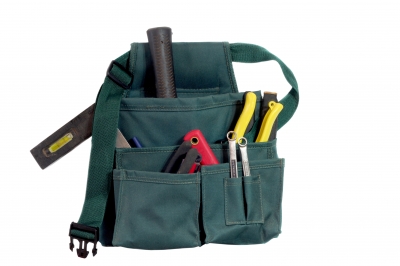
I think I may just be trying to justify all my “unfinished business.” At the same time, however, there are benefits associated with prioritizing variety and new challenges over confining yourself to following a set way of doing the same thing forever and forever, amen. Seeking variety has introduced to new ideas, new ways of doing things, new people, new insights, and new experiences that I would have otherwise missed. The key issue here, for me, is discerning what is of value that I need to keep with me as I journey on to explore new avenues. It is almost as if I have spent my lifetime on a “scavenger hunt”—-a scavenger hunt in which the goals are not predetermined. Therefore, I don’t know what I am looking for until I find it and try it on to determine if it is a “comfortable fit.” If it is, it gets put in my “tool bag” and carried with me to future adventures.  Along the way, of course, I find I have outgrown some of the “tools” in my bag and I exchange them for a newer, more effective “tool.”

Through the years I’ve collected tools like the ten commandments, the beatitudes, the Lord’s Prayer, and Christ’s commandment to love one another and do unto others as you would have them do unto you. Later, that latter “do unto” belief was bolstered by the Wiccan  belief that whatever you do to others comes back to you threefold as well as by the concept of “karma” that I also stuffed in my tool bag. Some of the tools I have discarded are beliefs taught to me by fairy tales: that love is forever and that you will live happily ever after. I have discarded many beliefs I developed during childhood: that everyone is honest, that a spoken promise or commitment is better than a written contract, and that I should not question authority or be assertive or aggressive. And, of course there are the “big tools” I have discarded that almost killed me: the beliefs that drinking alcohol and eating were fun activities that “felt good,”  and therefore, I should be able to drink and eat what I wanted, as much as I wanted,  whenever I wanted.

Here are some of the new tools I’ve put in my bag: It is okay to say no, it is okay to express my own feelings and meet my own needs, not everything has an “ending” and some things you thought would never end do end. I have learned that pain and “being wounded” by some of life’s experiences are not necessarily bad things—-that they often lead to growth and newer, better outcomes. Pain can bring spiritual clarity, and being a wounded survivor can give you strength, insight, empathy, and heighten your ability to help others. Of course, over 32 years ago, I put AA’s 12 steps in my tool bag, and they are still there. However,  I take them out periodically and refine them so they continue to be “new and useful” tools. My newest tool is one I  find extremely useful: centering or contemplative prayer in which I consent to quietly seeking and receiving God’s unconditional love.

It took me all these words to realize what I am trying to say is life is not so much about “finishing something” as it is about evolving—-it is about process and not perfection. It is about the journey and not the destination. What tools have you discovered, picked up,  or revised in your tool bag?  What ones have you discarded? May God bless and keep you.