Archives for category: Spirituality

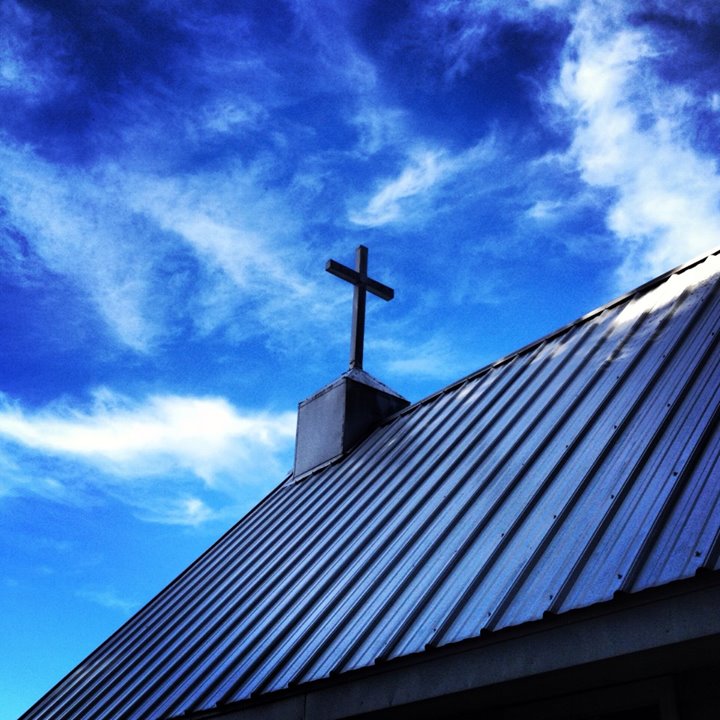
Sky View Cross

Photograph courtesy of Joshua Burgard

Today’s quote is very short, and it comes from Carolyn Warner’s  Treasury of Women’s Quotations (p. 243, 1992,Englewood Cliffs, NJ: Prentice Hall). Pearl Bailey is cited as saying ” People see God every day, they just don’t recognize Him.” This one, short, and simple sentence got me to wondering. “Okay, self where did you see God in the last 24 hours?”

I first saw him when I got up in the morning, let my dogs out and said my morning prayers. I saw him again when I read inspiring “posts” on Facebook. Then, when I taught my class, I saw him in the eyes and souls of my students as we role played how to encourage a depressed person to socialize with others.

Then, came one of yesterday’s “Big God Incidents.” This happened when I found a parking ticket on my car after teaching my class.  I immediately went to DPS on the university campus to have it revoked. The officer on duty revoked it,  but when asked if the policy he’d just explained was in writing anywhere he  said “no” and pointed out very authoritatively that the ticket was given because that was the way they’d been doing it for the twenty-six years he’d worked there. The old me would have “gone combative on him.” However, what I did do was not that much better—-I went home and immediately looked up the University’s Emeritus Parking Policy in the Faculty Handbook and found that, indeed, the policy did not read the way it has been enforced all these years. Here is where God comes in….rather than get my ego all involved in proving my interpretation of the written policy was correct and his was wrong, I just decided to let it go. Accept. Let God handle it. Take my “ego” out of it. I will send documentation of the incident to my Department’s Chair and leave it up to her discretion whether or not something should be done about clearing up the conflict between written policy and actual practice.

Then I met God again yesterday evening at Centering Prayer as His light filtered through the stained glass window onto those of seated in a prayer circle quietly consenting to receiving His love. After that meeting ended, I set up my last meeting of the day. It was an open twelve step meeting for beginners. People came from two treatment centers, and we had to pull out extra chairs. Last week there were only four of us, and then in this second “Big God Incident” of the day, God sent all of these people to be introduced to the seeds of recovery. I met God in what some of them said, in how they said it, and in the eyes and hugs of gratitude from the three who asked for a twenty-four hour “chip”—-a medallion that reminds people that God is with them helping them stay sober and clean one day at a time. I was ashamed that ten minutes before the meeting started I had complained to God that  I was tired and wished I could go home instead of setting up and leading a meeting probably  no one would attend. God had a purpose for me, and I thank him for helping me carry that purpose out.

Obviously, God was everywhere yesterday—-I am sure he was in many more places I failed to notice. It has been my “recovery life-time” practice to make a “gratitude list” whenever I feel depressed or sorry for myself. I’ll probably still do that, but I am going to start making my “where I saw God” list instead whenever I feel tired and question the path God has me walking. May God bless and keep you.

Broken Heart

Image courtesy of Idea go/ FreeDigitalPhotos.net

I finally got up enough nerve to ask a question that has always bothered me in Sunday School class this morning. We were discussing The Lord’s Prayer and the words “debts” and “trespasses.” I asked what these words meant in the context of this prayer because they surely meant more than owing money or trespassing on someone’s property. The consensus of those in the class was that these words meant to forgive those who have wronged us so that our hearts will be open to receive God’s love and forgiveness. The class agreed that holding on to a resentment blocks your heart from receiving God’s healing love. The discussion about the harm done by resentments could have been lifted verbatim from a twelve step meeting.

I cannot believe I have been in recovery over thirty-two years and a Christian longer than that—–and did not begin to understand this important point until this morning. I realized a long time ago that the Lord’s Prayer is talking about creating God’s kingdom here on earth in the here and now by all that we do and by us being a conduit for God’s love, but I had never before realized the full meaning of the “forgive others” part of the prayer. I cannot feel worthy of forgiveness, forgive myself, or be receptive to God’s forgiveness as long as my heart and soul are barricaded by resentments that shut God and God’s love out.  It is not that God doesn’t love or forgive me; the problem is my heart can be closed off and unwilling to let God love and forgive me.True healing cannot occur without allowing God access to my heart, and bearing grudges and holding resentments keeps that from happening. No wonder the 4th and 5th step in twelve step recovery are so important————without forgiveness there cannot be healing, and without recognizing our transgressions and making sincere amends for them wherever possible, healing cannot occur.

Forgiving wrongs done us by others can be an overlooked, unspoken part of working the 4th and 5th step. Working these steps ask us to own our own responsibility for the part we played in the situations that gave birth to our resentments. We must do that first and forgive others their part in the wrongs we’ve experienced before we can be forgiven—–by others, by God, and by ourselves so we can experience the healing embodied in letting go of resentments and/or working the twelve steps.

I hope everyone is having an enjoyable Sunday. May God bless and keep you.

Plums and Prunes

Image courtesy of Praisaeng/ FreeDigitalPhotos.net

Overheard around the tables this morning was an often repeated phrase, “Just take the next right step.” It is often used in connection with the phrase, “Let Go and Let God.” I had just come from a Centering Prayer Group where I had disclosed  that during our 20 minutes of silence my thoughts had kept vacillating between meditative silence and worry about my computer not working—-that it was just another thing I couldn’t control, just like my worries about my  aging father’s health. The group discussion then turned to how centering prayer lets us “exercise our ‘letting go muscle.'” I must admit that sometimes out of twenty minutes of “quiet time” devoted to centering prayer I spend about 18 minutes of that letting go of one random thought after another.  However, the good news is the exercise is starting to make it easier to let go of things in my life outside of centering prayer.

So after my two group sessions this morning, every time I caught myself worrying about my computer wireless connection not working I would tell myself to “let go of it”—-that the wireless disconnection had mysteriously occurred, and that God could just as mysteriously correct the situation.  I was gone for a little over three hours, and when I got home my computer wireless connection was functioning once again.

How many years, how many times, do I have to wear myself out trying to solve problems that are better left in God’s hands? Will I ever learn just to turn things over without causing myself undue stress by trying to solve my (or someone else’s) problem(s) all by myself until I “give up” and then turn things over?  When will I realize “taking the next best step” involves trusting God and carrying on with my life as God would have me live it?

I would bet money this letting go muscle of mine is going to need to be developed and fine-tuned one day at a time for the rest of my life. I am just grateful I am able to do it more quickly now than I previously could.

Here’s another “weird and way out analogy” that wandered into my head this morning. Our group was discussing scones and using the term “plum” and “prune” interchangeably. Without thinking, I commented, “A prune is just an elder-plum.” In retrospect, my life’s experiences and the progress I’ve made in turning things over to God over the decades I’ve spent in recovery have been turning “my will and my life” into a more highly evolved spiritual being. Just as a plum becomes chewier and develops more sweetness and flavor as it becomes a prune, perhaps this letting go business has helped distill my being into an essence that is more easily connected to God. God bless and keep you, plum, prune, or whatever.

eye

Image courtesy of Serge Bertasius Photography/ FreeDigitalPhotos.net

I was just doing my early morning “first pass” of Facebook postings, and I ran across one that a friend had posted concerning the fact that a sponsor had commented her Big Book looked a bit dusty. So, naturally, I started thinking about dust.  Now I, for one, would be in “deep doo-doo” if accumulated dust was used to determine the quality of my life.  I get in enough trouble with what accumulating dust does to my allergies; and I must admit I never before considered what it might be doing to my soul. I hardly ever dust, and my time proven rationale that saves me from doing so is dusting stirs up the dust and makes me start sneezing and wheezing.

I digress. Back to the topic at hand, a Big Book with dust on it. Here is my take on the situation and the comment I made regarding this specific dust, ” If it is imprinted in your heart it does not matter if the book it came from is dusty!” I have never been one to memorize the content of any book, not even the Bible or the Big Book, verbatim, word for word. What matters to me is my understanding of what I read and what it means to me and how can I apply it in my life today. I am impressed when people can quote large passages of scripture from memory, but I am more impressed when I can see the intent of the scripture expressed in how that person is living his or her life.

Looking back on that paragraph clues me into the fact that I spend more time than I want to admit judging others and how they are living their lives. Around the recovery tables we call that “taking someone else’s inventory.” It is a pastime we are discouraged from pursuing. The Gospel of Matthew does the same thing when it asks why we focus on a speck we notice in someone else’s eye when we have an entire “beam” in our own eye.

Somehow I have made the journey from dust to wooden beams. But the common theme is this, it is the eye of the beholder that determines whether something is a problem or not, and the best advice I can give myself or anyone else is focus on changing what needs to be changed in yourself rather than what you think should be changed or fixed in others.

Stay warm and dry. May God bless and keep you.

Question mark

Image courtesy of patrisyu/ FreeDigitalPhotos.net

A Face Book status posted by Bishop Charleston yesterday morning got me thinking about the simple, or not so simple, act of asking “why”—–something I do often, and not always with good intentions. As a small child I was reprimanded and punished for asking why, but it is something I continuously do even today decades later.  Because of Bishop Charleston’s words I am more certain than ever that I should have instead been encouraged to ask “why.”

Here is an excerpt from what Bishop Charleston had to say: “….our God invites us ever forward, following the endless path of why….Our faith, therefore, is not a law but a lab, a place of inquiry, a process by which we come to learn, and in the learning, love.”

Accessed 2/10/14 at: https://www.facebook.com/bishop.charleston

Reading these words freed my spirit to soar to the heavens…..vindicated, validated, and “right with my God.” Then I had to stop and think. What a relief it would be to have all my decades of “why” questions  justified! However,but in good conscience, I am not convinced my motives in asking why served to promote learning and love.  What I replied to the Bishop’s post was: ” I must confess I have a tendency at times to let this bothersome question of ‘why’ keep me distanced from God. At those times I think there is a degree of anger and resistance influencing my questions. With that type of ‘why’ question I am not open to learn and to grow in love. I am learning to temper my inquiring spirit with acceptance, faith, and trust. And, of course, I am still asking ‘why’ and gratefully learning and allowing love to grow.”

What did I mean by all those words? Sometimes asking why is my way of rebelling and saying “no….it is my way or no way” or “why didn’t things turn out the way I wanted them to?” Sometimes it is a criticism meaning “that’s not the way I would have done it.”  If you look closely, you can see the common denominator in all those “non-productive why questions” is “I”——my ego, my false self, or my self-will run riot, depending on which school of thought you use to categorize negative actions that are grounded in “self.” Twelve step recovery teaches that one needs to surrender this type of self-centeredness for God/Higher Power centeredness in order to enter recovery and survive life’s challenges.  As children of God we need a sense of identity, but we do not need to play God.

When I can ask “why” from an honest, non-critical place of wanting to understand, to learn, and to grow, then “why” is an excellent question to ask. It is one I will continue to ask. However, I will also continue to analyze my motives in asking the question. In doing so, I may find that I need to surrender my will to God and accept life on life’s terms.  When I am able to do that it is amazing how much simpler my life can be and how much my spiritual horizons expand—–and how many answers to “why?” I discover.  May God bless and keep you.

Breakfast

Image courtesy of piyato/ FreeDigitalPhotos.net

I never thought I would feel moved to write about a text from Isaiah, but then I never know ahead of time what I am going to write about. This is what caught my attention in church today:

Is not this the fast that I choose: to loose the bonds of injustice, to undo the thongs of the yoke, to let the oppressed go free, and to break every yoke? 7Is it not to share your bread with the hungry, and bring the homeless poor into your house; when you see the naked, to cover them, and not to hide yourself from your own kin?”

Isaiah 58: 6 (NRSV)

Until this morning I never thought about God expecting anything but literal fasting from fasting. This revelation that the Old Testament God would prefer we fight for justice, let the oppressed go free, feed the hungry, and give shelter to the homeless amazed me. It was written way before the time of Christ, and yet it speaks to what our world needs each of us  to do in our daily lives, right now, today!

I have had this bad habit of looking at God dualistic-ally, almost as if I have a Borderline Personality Disorder. Folks with this diagnosis perceive things as “all good” or “all bad” with very little wiggle room perceived between the two opposites. I have tended to see the Old Testament God as the “all bad, all punishing, overly- strict, judgmental God” and the New Testament God as a “loving God” who manifested in human form to gain empathy for our human condition and to extend unconditional love and Grace to us. Now, for the first time, I am starting to realize the Old Testament God was and is also a very loving God.

Fasting, for me, traditionally serves to help transport one’s mind into the spiritual realm. I am not belittling traditional fasting because it does serve an important spiritual purpose. But I am delighted to know my God prefers action to spiritual contemplation. This type of fasting has a much stronger potential for serving humanity in a concrete, here and now, heaven on earth manner. I never thought Isaiah would resonate with my soul, but today he did.

Looking at the word fasting from this new perspective would give our common word “breakfast” a brand new meaning! Instead of attending to our own physical hunger needs it would mean breaking out of our self-centered focus on our own needs and focusing instead on meeting the needs of others.  Now. Today. Every day. If I could do one of the things mentioned in Isaiah once a day as my new form of “breakfast”—-what sorts of things could I do? I could donate food or money to food banks and homeless shelters. I could get involved in or support programs that focus on teaching people to help themselves so that they can escape the oppression of poverty. I could try to address the needs of the spiritually hungry or oppressed.  I could donate clothing and other goods to the Salvation Army.  I really can’t list all the possibilities here, but just trying to makes me realize there are thousands of small ways that would let me do one thing on a daily basis to “break my fast.”

It sounds a little like “pass it forward.” In this instance, the “it” is God’s love being shared with others. My God wants me to be open to accepting his will and his love so I can, in turn, share love with others as I go about practicing this preferred  type of “fasting.” This is not to say I’m giving up on eating a traditional breakfast every morning—–I am just going to try to think of it as my “morning meal” and to address  “breaking my fast” in my morning prayers to God—–the ones that turn my will and my life over to him and ask for knowledge of his will for me and the power to carry that will out. Today, God has helped me get a better understanding of what his will is for me; God sometimes answers my prayers in wonderful, unexpected, and exciting ways. God bless and keep you.

February 8 2014 001

Photograph by K. Farwell

I got to try out my cleats this afternoon in a parking lot that was one solid sheet of ice…and, they worked! I took them off to go into the store, and stopped to replace them once I was outside and ready to work my way across the parking lot back to my car after I was through shopping. As I was replacing them, a man called out from the driver’s seat of his idling pickup, “Now that’s what I call a good idea!” I replied, “Yes, especially for clumsy folks like me….these are kind of like snow tires for ‘old ladies.'”

The surprise contained in that last paragraph is the way I implied I was an old lady; the phrase rolled off my lips without a moment’s hesitation. Back in the day,  any man that introduced me as his “old lady” was in for a stern reprimand from me. I did not consider myself “old,” and I was certain I did not belong to another human being. I had an even stronger negative reaction to being called “chick.”

Now that I’ll be 65 next week, I have had to accept that I am joining the “officially old” population in just a few days. I am viewing being “old” differently now; probably out of necessity. Now it is almost like an honor to have reached recognizable “elder hood.” Ah, in that term, lies the essence of my new found comfort. To me, being an elder means being a respected citizen venerated as a source of wisdom gained from having lived a full life. Turning 65 represents hitting a milestone—a time to celebrate all that I enjoyed  and survived along the way.  My comfort level with being an elder is based on the insight that real wisdom lies in my willingness to continue to evolve, learn, love and grow. Nothing has to stop—-except those things I have always needed to stop.

So, in a few days I will officially consider myself an elder. Yes, there will be “older moments”—-the kind I still don’t enjoy; most of those are an effect of physical aging. My human body is wearing out one day at a time. This thought makes me chuckle because I realize my body has been doing that one day at a time for my entire life. I am sure that even as a toddler and small child I had cells in my body that were wearing out and being replaced by new cells. This aging process is different though. It is not just about losing cells, it is about losing abilities, or at least partially doing so—-abilities that I have taken for granted up until now. I gratefully realize, however, that I have come out on the “winning side” of the bargain;  I have gained so much more than I could ever possibly lose in this experience called life. So what if I don’t move as fast or as gracefully as I once did? So what if I have periodic bouts of pain? My “lifetime of experience”  has certainly been worth the price. I even welcome the wrinkles that are becoming more pronounced on my face; to me they are mapping out the emotions I have experienced during my life time, and I am happy  most of my wrinkles are “smile wrinkles.”

Enough. I had no idea I’d end up writing today about my thoughts as I approach the age of 65. No telling where my mind will wander when I let it! Thanks for wandering with me. God bless and keep you.

Control

Image courtesy of Stuart Mile/ FreeDigitalPhotos.net

Again, here I sit typing at the keyboard. Spoiler alert: today I am going to be talking  health issues in some detail, so you might want to skip to the last paragraph if you want to “cut to the chase” and read my spiritual slant on all this.

I called me doctor yesterday. It was a form of surrender. I gave up. I have been doing everything I can to control my blood sugar levels by diet alone. Up until now I have been very successful—-mostly, I think, due to God’s grace. I went off of my oral diabetic medication over three years ago and have not had to go back on it because God showed me a way to eat that is healthy for me. I am glad I called and asked for help because my fasting blood sugar when I woke up this morning was 67.

Thirty some odd years ago, long before I became a Type 2 diabetic, I was diagnosed as hypoglycemic. At that time my low blood sugars were mostly due to forgetting to eat at set times (in rebellion) or eating the wrong things.  My self-will run riot in regards to controlling my own food agenda continued, and, consequently, I became a Type 2 diabetic about fifteen years later.  When my blood sugar is low (hypoglycemia) I get a bad headache, I feel irritable, nothing seems to “go right,” and I have trouble thinking clearly. It is a bit like being a little bit drunk or, perhaps even more so, experiencing a hangover.

I should not be surprised that my body chemistry is changing as I age, but I am not enjoying it. I am no longer predictable. Yesterday I realized that I was once again trying to “control” my food and health even though I have asked for God’s help. That is when I surrendered, because I am thoroughly confused at this point. Fruit and protein are supposed to keep your blood sugar level as is eating five small meals during the day about 3-4 hours apart.  Complex carbohydrates (whole grains) help some people, but they are bad news for me,  so I avoid eating them or anything with flour or sugar in it. I know I need to add fruit and/or protein to my diet,  but at this time I am unsure  how to do it.

My doctor’s office just called me back right before I began writing this blog. My doctor’s advice was to add fruit juice, fruit, or protein. She suggested yogurt. I told the nurse I eat Greek yogurt and fruit at once or twice a day, so I would not be adding them to my diet unless I added additional amounts. Here’s what we finally decided for me to try first: a mid-morning small fruit or protein serving and adding additional fruit to my lunch. Since I asked God this morning for knowledge of his will for me and the power to carry that out, I will follow my doctor’s advice and see what happens.

Now that I’ve bored you with all that tedious detail, I’ll try to tell you what spiritual message I see in all this. First, I need to trust God—even if that means asking for and following advice from others. Second, I need to act accordingly. This is where faith comes in because in the past when I’ve added the recommended foods I stopped losing weight and even started gaining weight at times. The spiritual message I am getting from all this is sometimes you  just have to trust God and carry on—-so, “Trust God and Carry On” will be my motto for today. Take care,  and God bless and keep you.

coffee2

Image courtesy of amenic181/ FreeDigitalPhotos.net

Well, here I sit again in self-imposed isolation listening to the noise of the snow plow break apart the stillness that envelops the neighborhood. The school across the street is quiet and empty. My dogs have no children to bark at as they pass by our yard. Yesterday’s frozen precipitation is, of course, still hanging around and challenging outdoor movement from place to place.

In some ways, the quiet stillness accompanied by the “tick-tock” of the clock on the wall is like being in the presence of an old and comfortable friend.  This friend gives me permission to be lazy, to be productive, to be creative—-to be “me” in any way I choose. That brings a smile to my lips—-in typing that last sentence I realized I always have the opportunity to choose how I want to exist in any moment.

Today I choose to wrap myself in God’s love and to make choices that are healthy for me. I have no deadlines, no appointments, no obligations, and no list of things I have to do. I am left with the choice to do what I must to survive my reality—–and that is to turn my will and my life over to the care of God as I understand him.  In the beginning of my recovery this turning things over 12 step stuff was just “a phrase often repeated.” Now after all these years and many miracles later this “turning over” comes from my heart, and  I enjoy releasing my will and my life to God. Of course, I still have times when I stubbornly hang on to my futile self-centered attempts to control, but even then I find myself begrudgingly handing things over to him.

I have started practicing a new ritual in my life. It is one of my early morning rituals, and it is much more meaningful than making coffee or cooking bacon.  I walk to my dining room, face the east, and look at a framed counted-cross stitch my mother did for me. I am looking at the words my mother so painstakingly spelled out:  1 Corinthians 13: 4-7. These special words describe God’s love for me and for everyone. Then I bow and release my “will and life” to God. In return, as I fold my arms in front of my chest, I literally feel God wrapping his arms around me and hugging me. Prayer and personal, private sacred words—-words that affirm and represent the love shared between God and myself—–are very important components of this early morning ritual. This ritual is both comforting and powerful. It puts my day “on track” and keeps my soul and heart open to God.  It empowers me to follow God’s will rather than my own throughout the day.

As I sit typing in this quiet stillness, I am not alone.  God is by my side; his presence is here. My four dogs are relaxed, warm, and sleeping, and I am happy.

diaster plan

Image courtesy of  Stuart Miles/ FreeDigitalPhotos.net

Today is a day of irony. I was lecturing to my class about the role nurses play in responding to disasters, and I mentioned that one of the most important things we can do is try to prepare people about how to respond in a disaster/crisis situation by teaching them safety tips, etc. One of the examples I gave to illustrate this point was to remind them how important it is to keep fire exits accessible, and I mentioned that currently  the front door to the building we were in was  chained and padlocked shut, and if there was a fire they should not try to exist through that door.

On my way out of the building after my class I stopped to leave a complaint in the Dean’s office about what a major fire hazard it is to have a fire exit locked. It was explained to me this was the only way they could get the door to lock and that, consequently, this was the only way they had to”secure the building.” I was also told that unfortunately, at this point, no one had a key to the padlock. I was nice. I exited the building without saying something I would regret later. There comes a time, I think, when it should become more important to secure the safety of people occupying a building than it is to secure the contents of a building.

As always, I am left wondering what I am supposed to learn from this—–what spiritual lesson is embedded in today’s situation at the university? I must examine my own “crisis readiness.” I must admit, I only keep a  limited supply of canned goods and bottled water on hand for emergencies. I have “Mylar miracle” blankets that are made to keep body heat in  should it become necessary to do so. It is my plan that my dogs and I can use these “throw away” blankets along with other blankets  if we are without power. Beyond that, physically speaking, I am not big on “emergency preparedness.”

I have endured and survived numerous health “crises” during the past several years, and I have learned my best strategy for preparedness is staying spiritually fit and keeping my connection with God strong. Then, in times of crisis, I am aware God is facing it with me. I have to practice “talking to God” when I don’t have “a problem” so that it is easier to instantly turn to God when I do. This type of spiritual preparedness is similar to what we teach new comers in 12 step programs. We teach them to practice calling their sponsor on a regular basis even when things are going good. This important practice makes it easier to reach out to a sponsor when one does have a problem. If I cultivate the habit of relating to God on a regular basis, then it is much easier for me to automatically turn to him in times of crisis.

And where does the locked door fit into all this? Well, for me, the locked door represents my false self. I consider my “false self” to be my self-centered ego. That “me and only me” place in my psyche has a tendency to try to run things without God’s assistance. When my ego shuts God out, my inner awareness of God is blocked, it is as if I am effectively locking him out of my heart and soul because I refuse to acknowledge his presence there and everywhere. I have to constantly work at surrendering my life and my will over to God so that my heart and soul are always open to God’s presence and love rather than being “blocked”  from them by my ego.

May our perception remain open so we are able to perceive and acknowledge God’s constant love and presence today, tomorrow, and always. May God bless and keep you.

For more on this topic go to: http://www.semissourian.com/blogs/farwell