Archives for category: love

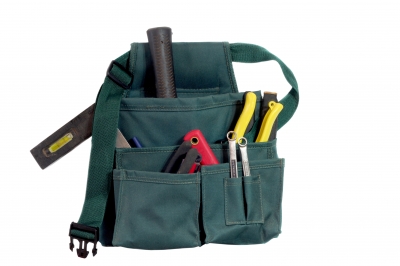
toolbag

Image courtesy of  Gualberto10 / FreeDigitalPhotos.net

I have two uncompleted afghans, two uncompleted scarves, one uncompleted dishcloth,  an uncompleted shawl, and numerous other crochet projects that have been on hold for so long I no longer know what they are or where the pattern is I was following when I was working on them. I often get “hooked” (no pun intended) into crocheting a new pattern just for the thrill of creating something different, but when the newness wears off I sometimes abandon the project. Novelty must be one of my life’s strong allures, and, in fact, I think that attraction played a part in the relationships I have explored during my lifetime. It may even have played a part in my constantly seeking and exploring various religions.

I think I may just be trying to justify all my “unfinished business.” At the same time, however, there are benefits associated with prioritizing variety and new challenges over confining yourself to following a set way of doing the same thing forever and forever, amen. Seeking variety has introduced to new ideas, new ways of doing things, new people, new insights, and new experiences that I would have otherwise missed. The key issue here, for me, is discerning what is of value that I need to keep with me as I journey on to explore new avenues. It is almost as if I have spent my lifetime on a “scavenger hunt”—-a scavenger hunt in which the goals are not predetermined. Therefore, I don’t know what I am looking for until I find it and try it on to determine if it is a “comfortable fit.” If it is, it gets put in my “tool bag” and carried with me to future adventures.  Along the way, of course, I find I have outgrown some of the “tools” in my bag and I exchange them for a newer, more effective “tool.”

Through the years I’ve collected tools like the ten commandments, the beatitudes, the Lord’s Prayer, and Christ’s commandment to love one another and do unto others as you would have them do unto you. Later, that latter “do unto” belief was bolstered by the Wiccan  belief that whatever you do to others comes back to you threefold as well as by the concept of “karma” that I also stuffed in my tool bag. Some of the tools I have discarded are beliefs taught to me by fairy tales: that love is forever and that you will live happily ever after. I have discarded many beliefs I developed during childhood: that everyone is honest, that a spoken promise or commitment is better than a written contract, and that I should not question authority or be assertive or aggressive. And, of course there are the “big tools” I have discarded that almost killed me: the beliefs that drinking alcohol and eating were fun activities that “felt good,”  and therefore, I should be able to drink and eat what I wanted, as much as I wanted,  whenever I wanted.

Here are some of the new tools I’ve put in my bag: It is okay to say no, it is okay to express my own feelings and meet my own needs, not everything has an “ending” and some things you thought would never end do end. I have learned that pain and “being wounded” by some of life’s experiences are not necessarily bad things—-that they often lead to growth and newer, better outcomes. Pain can bring spiritual clarity, and being a wounded survivor can give you strength, insight, empathy, and heighten your ability to help others. Of course, over 32 years ago, I put AA’s 12 steps in my tool bag, and they are still there. However,  I take them out periodically and refine them so they continue to be “new and useful” tools. My newest tool is one I  find extremely useful: centering or contemplative prayer in which I consent to quietly seeking and receiving God’s unconditional love.

It took me all these words to realize what I am trying to say is life is not so much about “finishing something” as it is about evolving—-it is about process and not perfection. It is about the journey and not the destination. What tools have you discovered, picked up,  or revised in your tool bag?  What ones have you discarded? May God bless and keep you.

Peace Symbol

Image courtesy of digitalart,/ FreeDigitalPhotos.net

Today has been an unusual day. Sleet has been falling from gray, overcast skies. There is a sheen of ice visible on walkways and roads.  Droplets of water are frozen on my clothesline. Through all of this winter mess, an occasional soft roll of thunder can be heard overhead.

I turned my television on this morning to check the weather report, and after a brief presentation of the weather, all I heard was “Crimea this” and “Crimea” that. I always thought Crimea was a place in history books where Florence Nightingale actually practiced nursing for a few years. Now it is a word that is a bit too real in the present moment. With the word “Crimea” other words are being spoken:  words  like “war” and “aggression.” I pray daily for peace, but I think a collective effort would be more productive. Perhaps our world needs to step back and take a deep breath and re-direct its energies to peace for all.

Naturally, my thoughts turn to what I can do to promote peace. I can continue to focus on developing a strong spiritual “inner core”—–and I can share that with others with whom I come in contact. I need to share God’s love so my actions radiate peace and concern rather than anxiety and resentment so I can cultivate calmness and peace rather than discord and stress in my interactions with others.

Watching the news this morning was not quite as bad as watching the Bay of Pigs crisis unfold on our family’s old black and white television. It was, however,  reminiscent of that scary point in time.  I’m not ready to go out and start digging a bomb shelter. I’m not ready to turn into “Henny Penny” and run around proclaiming the “sky is falling.” I am, however ready for peace on earth. I am ready for each one of us to realize that we are all one, and in fighting others who we call “enemy” we are fighting just other versions of ourselves. I am ready for the world to realize God’s mercy, grace,  love and compassion extend to everyone—–including our President, those who are killing each other in the Sudan, the man this morning’s newscasters are referring to as the “Russian dictator,” the children next door, the elderly lady two houses up, the homeless man or woman trying to keep warm, or even those who abuse others, be they human or animal.

My faith has repeatedly taught me not to judge others. If I am honest about all the wars my country has fought, I cannot afford to be judgmental about another country’s acts of aggression. I should not judge such actions even if I were a citizen of a country that had never been aggressive itself.

So, I am back to my question. What can I as an individual do to promote peace. I can pray for peace and love to prevail. I can live peacefully so the “ripple effect” from my little corner of the world will promote peace rather than aggression. The world’s situation is one of those things referred to in the Serenity Prayer that I cannot change, but if I work on changing myself and my actions, the only things I actually can change,  maybe that one little change will have a “butterfly” affect on the rest of the world. Maybe not, but at least I can live with myself knowing I have tried. God bless and keep you.

Opening Door

Image courtesy of Idea go/ FreeDigitalPhotos.net

I have been sad the past couple of days because we had to close a twelve step women’s group due to lowering attendance and lack of women with long term recovery to lead the meetings.  Part of my mourning is fed by  my feeling guilty because I didn’t step up and try to rescue the group. Not that it is all about me, but I helped keep it afloat for years and had to stop due to health reasons. Now I want to jump in and try to “save” it, only I know I can’t over extend myself or I may be back in the hospital again. There are other groups, and recovery can be found in all of them—— it is just that this particular group was formed by women helping women and it lasted for longer than twenty years.  It was my lifeline when I first moved to this area.

As I get older, it seems to me that life is trying to teach me that a big part of life is letting go of things. I don’t think it ever gets easy, but perhaps I am supposed to learn that all things “pass away” except my soul, the souls of others, and God’s loving spirit. But I don’t know what my life would be without “attachments”—-and I don’t mean the kind  attached to a document. I mean the kind that are people, places, and things that are important in our lives. Right now I have a small white dog nestled close to each side of me as I type. I have a very strong and loving attachment with all four of my dogs, but I know we will not always be able to be together. I have buried both sets of grandparents, one parent, a step-son, and numerous friends, relatives, and pets. I know death is part of the cycle of life. Obviously, there is just part of me that does not want to accept that.

Oddly, I do not fear my own death. I have been surrounded by God’s love numerous time when I was close to dying. I always felt a calm, welcoming love at those times that left no room for anxiety.  At those times when all other reality is swept away, it is easy to realize what matters is our soul and being embraced by God’s love. But now, today, my dogs bring comfort. I depend on my friends and family. Their love and support keep me going—-just like the unconditional love of my dogs keeps me going. I am not saying that kind of dependence is wrong or bad. I am just saying I need to realize any or all of it can be gone in a  moment.

I’m beginning to think what is going on here is my life-long struggle of wanting to control and fighting the realization that I have no control. I have to accept that God is in control.  When I do, at those times of surrender, I find  a great deal of comfort to in realizing God has had control all along and will  have control for all eternity. I have learned that if I stop fighting God’s control I find  things turn out much better than they would have if I were still trying to control them. It is just a matter of exercising my “faith muscle.”  I have to believe my dogs, my family, my friends, and my world will be just fine without me and I will be just fine without them when time or circumstance parts us as long as we are all connected by God’s love—–a love which cannot be bound by time or place.   God bless and keep you.

Broken Heart

Image courtesy of Idea go/ FreeDigitalPhotos.net

I finally got up enough nerve to ask a question that has always bothered me in Sunday School class this morning. We were discussing The Lord’s Prayer and the words “debts” and “trespasses.” I asked what these words meant in the context of this prayer because they surely meant more than owing money or trespassing on someone’s property. The consensus of those in the class was that these words meant to forgive those who have wronged us so that our hearts will be open to receive God’s love and forgiveness. The class agreed that holding on to a resentment blocks your heart from receiving God’s healing love. The discussion about the harm done by resentments could have been lifted verbatim from a twelve step meeting.

I cannot believe I have been in recovery over thirty-two years and a Christian longer than that—–and did not begin to understand this important point until this morning. I realized a long time ago that the Lord’s Prayer is talking about creating God’s kingdom here on earth in the here and now by all that we do and by us being a conduit for God’s love, but I had never before realized the full meaning of the “forgive others” part of the prayer. I cannot feel worthy of forgiveness, forgive myself, or be receptive to God’s forgiveness as long as my heart and soul are barricaded by resentments that shut God and God’s love out.  It is not that God doesn’t love or forgive me; the problem is my heart can be closed off and unwilling to let God love and forgive me.True healing cannot occur without allowing God access to my heart, and bearing grudges and holding resentments keeps that from happening. No wonder the 4th and 5th step in twelve step recovery are so important————without forgiveness there cannot be healing, and without recognizing our transgressions and making sincere amends for them wherever possible, healing cannot occur.

Forgiving wrongs done us by others can be an overlooked, unspoken part of working the 4th and 5th step. Working these steps ask us to own our own responsibility for the part we played in the situations that gave birth to our resentments. We must do that first and forgive others their part in the wrongs we’ve experienced before we can be forgiven—–by others, by God, and by ourselves so we can experience the healing embodied in letting go of resentments and/or working the twelve steps.

I hope everyone is having an enjoyable Sunday. May God bless and keep you.

Breakfast

Image courtesy of piyato/ FreeDigitalPhotos.net

I never thought I would feel moved to write about a text from Isaiah, but then I never know ahead of time what I am going to write about. This is what caught my attention in church today:

Is not this the fast that I choose: to loose the bonds of injustice, to undo the thongs of the yoke, to let the oppressed go free, and to break every yoke? 7Is it not to share your bread with the hungry, and bring the homeless poor into your house; when you see the naked, to cover them, and not to hide yourself from your own kin?”

Isaiah 58: 6 (NRSV)

Until this morning I never thought about God expecting anything but literal fasting from fasting. This revelation that the Old Testament God would prefer we fight for justice, let the oppressed go free, feed the hungry, and give shelter to the homeless amazed me. It was written way before the time of Christ, and yet it speaks to what our world needs each of us  to do in our daily lives, right now, today!

I have had this bad habit of looking at God dualistic-ally, almost as if I have a Borderline Personality Disorder. Folks with this diagnosis perceive things as “all good” or “all bad” with very little wiggle room perceived between the two opposites. I have tended to see the Old Testament God as the “all bad, all punishing, overly- strict, judgmental God” and the New Testament God as a “loving God” who manifested in human form to gain empathy for our human condition and to extend unconditional love and Grace to us. Now, for the first time, I am starting to realize the Old Testament God was and is also a very loving God.

Fasting, for me, traditionally serves to help transport one’s mind into the spiritual realm. I am not belittling traditional fasting because it does serve an important spiritual purpose. But I am delighted to know my God prefers action to spiritual contemplation. This type of fasting has a much stronger potential for serving humanity in a concrete, here and now, heaven on earth manner. I never thought Isaiah would resonate with my soul, but today he did.

Looking at the word fasting from this new perspective would give our common word “breakfast” a brand new meaning! Instead of attending to our own physical hunger needs it would mean breaking out of our self-centered focus on our own needs and focusing instead on meeting the needs of others.  Now. Today. Every day. If I could do one of the things mentioned in Isaiah once a day as my new form of “breakfast”—-what sorts of things could I do? I could donate food or money to food banks and homeless shelters. I could get involved in or support programs that focus on teaching people to help themselves so that they can escape the oppression of poverty. I could try to address the needs of the spiritually hungry or oppressed.  I could donate clothing and other goods to the Salvation Army.  I really can’t list all the possibilities here, but just trying to makes me realize there are thousands of small ways that would let me do one thing on a daily basis to “break my fast.”

It sounds a little like “pass it forward.” In this instance, the “it” is God’s love being shared with others. My God wants me to be open to accepting his will and his love so I can, in turn, share love with others as I go about practicing this preferred  type of “fasting.” This is not to say I’m giving up on eating a traditional breakfast every morning—–I am just going to try to think of it as my “morning meal” and to address  “breaking my fast” in my morning prayers to God—–the ones that turn my will and my life over to him and ask for knowledge of his will for me and the power to carry that will out. Today, God has helped me get a better understanding of what his will is for me; God sometimes answers my prayers in wonderful, unexpected, and exciting ways. God bless and keep you.

coffee2

Image courtesy of amenic181/ FreeDigitalPhotos.net

Well, here I sit again in self-imposed isolation listening to the noise of the snow plow break apart the stillness that envelops the neighborhood. The school across the street is quiet and empty. My dogs have no children to bark at as they pass by our yard. Yesterday’s frozen precipitation is, of course, still hanging around and challenging outdoor movement from place to place.

In some ways, the quiet stillness accompanied by the “tick-tock” of the clock on the wall is like being in the presence of an old and comfortable friend.  This friend gives me permission to be lazy, to be productive, to be creative—-to be “me” in any way I choose. That brings a smile to my lips—-in typing that last sentence I realized I always have the opportunity to choose how I want to exist in any moment.

Today I choose to wrap myself in God’s love and to make choices that are healthy for me. I have no deadlines, no appointments, no obligations, and no list of things I have to do. I am left with the choice to do what I must to survive my reality—–and that is to turn my will and my life over to the care of God as I understand him.  In the beginning of my recovery this turning things over 12 step stuff was just “a phrase often repeated.” Now after all these years and many miracles later this “turning over” comes from my heart, and  I enjoy releasing my will and my life to God. Of course, I still have times when I stubbornly hang on to my futile self-centered attempts to control, but even then I find myself begrudgingly handing things over to him.

I have started practicing a new ritual in my life. It is one of my early morning rituals, and it is much more meaningful than making coffee or cooking bacon.  I walk to my dining room, face the east, and look at a framed counted-cross stitch my mother did for me. I am looking at the words my mother so painstakingly spelled out:  1 Corinthians 13: 4-7. These special words describe God’s love for me and for everyone. Then I bow and release my “will and life” to God. In return, as I fold my arms in front of my chest, I literally feel God wrapping his arms around me and hugging me. Prayer and personal, private sacred words—-words that affirm and represent the love shared between God and myself—–are very important components of this early morning ritual. This ritual is both comforting and powerful. It puts my day “on track” and keeps my soul and heart open to God.  It empowers me to follow God’s will rather than my own throughout the day.

As I sit typing in this quiet stillness, I am not alone.  God is by my side; his presence is here. My four dogs are relaxed, warm, and sleeping, and I am happy.

diaster plan

Image courtesy of  Stuart Miles/ FreeDigitalPhotos.net

Today is a day of irony. I was lecturing to my class about the role nurses play in responding to disasters, and I mentioned that one of the most important things we can do is try to prepare people about how to respond in a disaster/crisis situation by teaching them safety tips, etc. One of the examples I gave to illustrate this point was to remind them how important it is to keep fire exits accessible, and I mentioned that currently  the front door to the building we were in was  chained and padlocked shut, and if there was a fire they should not try to exist through that door.

On my way out of the building after my class I stopped to leave a complaint in the Dean’s office about what a major fire hazard it is to have a fire exit locked. It was explained to me this was the only way they could get the door to lock and that, consequently, this was the only way they had to”secure the building.” I was also told that unfortunately, at this point, no one had a key to the padlock. I was nice. I exited the building without saying something I would regret later. There comes a time, I think, when it should become more important to secure the safety of people occupying a building than it is to secure the contents of a building.

As always, I am left wondering what I am supposed to learn from this—–what spiritual lesson is embedded in today’s situation at the university? I must examine my own “crisis readiness.” I must admit, I only keep a  limited supply of canned goods and bottled water on hand for emergencies. I have “Mylar miracle” blankets that are made to keep body heat in  should it become necessary to do so. It is my plan that my dogs and I can use these “throw away” blankets along with other blankets  if we are without power. Beyond that, physically speaking, I am not big on “emergency preparedness.”

I have endured and survived numerous health “crises” during the past several years, and I have learned my best strategy for preparedness is staying spiritually fit and keeping my connection with God strong. Then, in times of crisis, I am aware God is facing it with me. I have to practice “talking to God” when I don’t have “a problem” so that it is easier to instantly turn to God when I do. This type of spiritual preparedness is similar to what we teach new comers in 12 step programs. We teach them to practice calling their sponsor on a regular basis even when things are going good. This important practice makes it easier to reach out to a sponsor when one does have a problem. If I cultivate the habit of relating to God on a regular basis, then it is much easier for me to automatically turn to him in times of crisis.

And where does the locked door fit into all this? Well, for me, the locked door represents my false self. I consider my “false self” to be my self-centered ego. That “me and only me” place in my psyche has a tendency to try to run things without God’s assistance. When my ego shuts God out, my inner awareness of God is blocked, it is as if I am effectively locking him out of my heart and soul because I refuse to acknowledge his presence there and everywhere. I have to constantly work at surrendering my life and my will over to God so that my heart and soul are always open to God’s presence and love rather than being “blocked”  from them by my ego.

May our perception remain open so we are able to perceive and acknowledge God’s constant love and presence today, tomorrow, and always. May God bless and keep you.

For more on this topic go to: http://www.semissourian.com/blogs/farwell

Sun Breaking Through2

Photograph courtesy of Joshua Burgard

Today’s blog is a tribute to author Anne Lamott.  The message she posted on her Facebook status this morning really spoke to me. First of all, she described, perfectly, the process I have to go through when I write something of worth for others to read. What a relief it is to know I share this attribute with a popular, well-read author! What spoke to my soul  the loudest, though, was her description of what  happens when one is able to dig through all the “chatter” that clutters one’s mind and soul until one reaches one’s “true self” (Lamott, 2014 accessed 2/2/14 at: https://www.facebook.com/AnneLamott).

Here is part of what she had to say: “And inspiration is when the really real in us gets through the chatter……… But inside that chatter, that bad self esteem and grandiosity and judgment and self-righteousness is the prize–me. My true me. Who I always was, deep inside, behind my eyes, taking it all in. My perfect precious self, who no one managed to ruin–not the parents, the culture, the worst men, the alcohol; not nothing ” (Lamott, 2014 accessed 2/2/14 at: https://www.facebook.com/AnneLamott).

I hadn’t thought about this link between my writing and my centering prayer before reading her status this morning. Both activities are centered in the  “true self” Lamott describes—-one that is undaunted by the “chatter” that occupies our minds or the messages given to us by our life’s experiences.  The mind’s chatter is always a distraction and challenge for me whenever I engage in centering prayer and  try to “go within” to my inner self and sit quietly so that I am able to experience God’s gift of love.

Feeling God’s deep and unconditional love in that inner, true-self space—– knowing it there, in my core, gives rise to a glowing, powerful love that is able to “bleed out” and infuse itself into other aspects of my life. The certainty of that love is real, palpable, and infinitely precious. It is also comforting to know that any time I need to “re-fuel” that feeling of being unconditionally loved, I can take that journey inward through all the mind chatter and tap into it once again. It is always there. It is always part of me. No matter what.

So, thank you, Anne Lamott. Your words have gifted me with strong support for my journey through recovery. May God bless and keep you and my readers.

bridge

Image courtesy of  tratong/ FreeDigitalPhotos.net

In the sermon I heard in church this morning a question I had asked several months ago came up as a topic of discussion. The church I belong to suggests we pray a series of prayers and read accompanying scripture 3-4 times daily. Included in each prayer session is a prayer of confession apologizing and asking God for forgiveness for our sins and promising our repentance. Today in our adult bible study class we learned that repentance is more than an attitude—-it also means actively turning away from what one is repenting.  The question I had previously asked was why  do we need to confess four times a day? My reason for asking the question was that I am uncomfortable asking for forgiveness when I promised “not to sin again” just a few hours earlier.  I am reminded of the story of the little boy that cried wolf too many times, when he finally did spy a wolf and run to tell the people in his village they wouldn’t take his warning seriously. By repeatedly confessing, asking for forgiveness, and promising to repent several times a day, do I not run the risk of God not taking me seriously—-or worse yet, not taking myself seriously?

The answer I was given to this question,  both at the time the priest and I had our conversation and again in this morning’s sermon, was basically that since we are imperfect humans we  tend to sin whether we realize it or not; hence the need to repeatedly confess and repent. I still have a bit of trouble with this philosophy. If repentance is based on a sincere apology and a promise not to do something again, wouldn’t we need to consciously know what sin  we were apologizing for in order  to avoid repeating it?

When I turn my will and my life over to the care of my Higher Power as I understand him, I need to  begin looking at my past and present actions to identify things I have done or am doing that hurt myself or others.  According to AA’s 12 steps, one then needs to  “make amends” and change one’s  behavior accordingly.  If I am sincere about changing something in my life, I ask for knowledge of God’s will and the power to carry it out on a one day at a time basis. And, yes, I often repeat that prayer several times a day.  AA’s 12 steps suggest we take a careful look at what we have done each day and make amends in a timely fashion. Nowhere in AA’s “Big Book” have I read a suggestion that we ask God to forgive our mistakes, promise not to do them, and then repeat the exact same prayer three more times in the same day.

Now that I’ve gotten that “rant” off my chest, I need to look at what is really important for me to realize in the midst of all this spiritual “free association.” Obviously, I and my self-pride are the problem. I doubt God is bothered by repeated requests for forgiveness and promises to repent. It is my pride/ego that resists “humbling” myself that often. I need to get over myself and  ask my Higher Power to forgive me for thinking I am above asking for forgiveness several times a day.  In reading what I have written so far, it is also obvious that many of my sins fall in the realm of attitude and false pride. My character defect of procrastination also lands a lot of my “sins” in the “things left undone” category. I need to “open the bridge” between God’s love and forgiveness and myself by being willing to ask for and receive it more  often than I do—–especially since I tend to deny my sins and not recognize them until I force myself to take a serious “mental inventory.”  Perhaps following a discipline of structured prayer sessions throughout the day may offer me a way to cultivate this habit.  May God bless and keep you.

Niagara Falls

Image courtesy of  dexchao/ FreeDigitalPhotos.net

I don’t know if it is the new year,  the recent extreme cold, the gray over-cast rainy day, or just the roving thoughts of a restless mind, but I find myself wondering this afternoon about where I find hope, comfort, and reassurance in my life. Granted, I am more self-validated than ever before, but, as does any human, I do need intermittent reassurance and comfort from a source other than myself.

I know in times of extreme duress I have found comfort in gazing at God’s creation. For example, on 9/11 I was in a hotel room in Canada with a bunch of women who served on an International Board of Directors with me. We had all rushed to a room where we could watch television and comfort each other when our meeting was interrupted by the news that the twin towers had been intentionally flown into by a plane filled with passengers. Several of the women were from the New York area. There were expressions of numbness, disbelief, and shock mirrored in the faces that surrounded me. I could not comfort these women or myself, for that matter.

I found myself looking out the window down at Niagara Falls. At that moment, I knew God had created this world and all the wonders in it, including myself and these women. I thought of all the trauma, war, pain, beauty, awe, and joy these falls had witnessed and survived over time, and I was comforted. I knew, awful as it was, this time would pass and that, come what may, God would be with us. We would and did comfort each other then and in the days to come, but God was the first to comfort me, and I am sure many in that room were also comforted by God in those harrowing moments.

What does this have to do with where I find my current source of hope, reassurance and comfort? Well,  if God is so strongly with me in times of crisis, I know he is with me always. All I have to do to tap into that well of comforting love is to be aware of it and consent to letting it enfold me. I am learning to do this in prayer, and I am delighted that I think this practice is beginning to contaminate other parts of my daily living that are not focused on intentional prayer. God’s love is always there, always comforting, and all powerful. In my life, I have been the only thing standing in the way blocking my ability to access that love.

I am learning, even when engaged in simple tasks such as washing dishes or doing laundry, to turn my thoughts away from how I can solve problems or do something all by myself and to redirect my thoughts to a more receptive “channel” that will let me acknowledge and accept God’s love and intention for me. It is very pleasant to be enfolded in God’s love and reassured that I am where I am supposed to be doing what I am supposed to do—–even  when I am “caught up in the mundane.” Ironically, when my soul, mind, and heart are in the “right place” and “right sized” there is no “mundane.” There is only God’s creation, love, and intent, and just “being” in a situation where my self-centered thoughts are quieted and redirected to God’s love is nothing short of a miracle.

Enjoy our melted ice and falling rain today. I am even looking forward to thunder in January. May God bless and keep you.