Image courtesy of Stuart Miles,/ FreeDigitalPhotos.net
Have you ever been so happy that you were afraid to trust your happiness and found yourself intentionally distancing from that emotion? Are we so used to longing for that which we don’t have that when we get “it”—– whatever it is—–we quickly begin to feel restless and “not quite right” once more and begin to search for something else that will make us happy?
Is finding happiness like putting ourselves in the midst of a geographical cure only to find that our problems came with us? I apologize for asking multiple questions, but I am in the midst of a confusing emotional journey. I received very good news recently that something I had wanted for a long time was going to happen. I was very happy and very grateful, but an hour had not yet passed before I started feeling restless and uneasy. I could bring fleeting moments of joy back by focusing my thoughts on the good news I had gotten, but now, days later, that has given way to a minor depression, and I find myself not willing to seek out the solution to this emotional state. I know God is always with me and that if I “tune in” to that love and peace, I too will be peaceful and content. Once again, I seem to prefer floating around in a sea of uneasiness and “agitated depression” rather than relinquishing my will to God’s will. I find myself praying less, eating more, and thinking and writing less about spiritual matters. I seem to be purposefully avoiding consenting to letting God’s will and love empower me.
Years ago I was at an addictions conference, and one of the speakers talked about the research he had done with people addicted to gambling. He reported that as soon as such people won money from a slot machine, even a jackpot worth thousands, they immediately felt restless and dis-eased until they once again put money in the machine and began pulling levers or pushing buttons. The speaker explained his research suggested these addicts were more addicted to the potential of winning than they were actually winning. Perhaps, all addiction is about being addicted to something imagined and/or potential rather than reality.
I know working in partnership with God brings me happiness, contentment, and serenity. And I know I periodically distance myself from that partnership. I know intimacy scares me because of life experiences I have had, and, perhaps, I am more uncomfortable getting closer to and staying close to God than I realized until just now. Then too, on the tails of that insight, comes another “aha moment.” That may explain, somewhat, why I seem to be more comfortable in the familiar comfort of my “self-will run riot” than I am in the serenity I experience when I consent to God’s love and will. Could it be possible that I am not as addicted to chaos, food, or alcohol as I am to the illusion that I can control my life on my own? Perhaps the bottom line is I am a “self-will addict” that can only enjoy happiness, contentment, serenity, etc. temporarily and, just like the gambler putting money back into a slot machine, I am the one who distances myself from God to chase the illusion that this time things will be different and I can control my life with less help from God and by being less connected to God’s will. I have to “break the strong connection” or else I will not be able to chase the illusion of independent or mostly independent control.
Well, that is enough insight for today. I know what the solution is, but I seem to be choosing chasing the illusion over re-connecting more closely with God. And so, I get “sadder” and more restless, and I believe God may be crying—–or very, very irritated because his child repeatedly gets caught up in this approach-avoidance dance . I know he is used to it and me by now, but I know he also wishes I’d stop putting myself in harm’s way by periodically putting distance between us.

Image courtesy of artur84w,/ FreeDigitalPhotos.net
Sunday, sitting in church, a bit of wisdom being read from the bible flew straight into my heart as if it had been launched on an arrow meant only for me. It was from the fourth chapter of John, and the reading was about when Jesus had been given water by a woman who was drawing water from a well, and he, in turn, offered her the water of eternal life. I was familiar with that part of the scripture, but what caught my attention was what Jesus said to his apostles after the woman went to tell her neighbors about her encounter with the Messiah.
With the brief transition of “Meanwhile,” John next describes how the disciples urged Jesus to eat. The answers Jesus gave them astounded me: “I have food to eat you do not know about……My food is to do the will of him who sent me and to complete his work.”
There it was. Words in black and white. Ancient words. Words full of wisdom. The words I need just now, just this moment to energize my efforts to eat only that which is healthy for me to eat. I have spent sixty years, give or take a few spent indulging my addiction without restraint, on one diet or another. The words describing my efforts at healthy eating may have changed over time from diet to food plan or from calories to ounces, but I have learned the only ingredient that gives these tools life and makes them effective is when I turn my will and my life over to the care of God as I understand him.
So, when people offer me something to eat, always with the best of intentions and with caring hospitality, and I decline their offer, I will probably say, “No, thank you, I’m a diabetic and I can’t eat sugar or flour” or just “No, thank you”—–but I will, I hope, think to myself, “I have food to eat you do not know about.” And, if I am spiritually fit that day, my thoughts will add that the focus of my life is doing God’s will.
When I allow myself to feel the love of God within and around me and quiet my thoughts so that my ego surrenders to that love, I am never hungry. To be honest, when I am practicing contemplative prayer, my stomach may growl or I may have a fleeting craving for one food or another, but those thoughts are allowed to immediately “float by” and are quickly replaced by my link to God’s love. And, as they say, that is “Priceless.”

Image courtesy of Jonathan Fitch,/ FreeDigitalPhotos.net
I read this morning of a woman who tells others “to have enough”—-not to “have a good day” or “God bless you”—-what she gives others is just the wish for them to have enough. Now, being the addictive personality I am, I found that wish a bit hard to comprehend. But I’ve thought a lot about it today, and I realize it is a philosophy I need to adopt. If I realize I have enough, I will stop seeking more. And more. I will change my focus from acquisition of things “outside” myself and focus instead on nurturing that which is already “inside me”—-my inner being which is the soul God gave me.
If I realize I have enough and that I am filled with God’s spirit and love, I won’t always be wanting to “fill” myself with drugs, alcohol, or food. I won’t need to find a “fix” because God created me already “fixed.” All I have to do is realize it, consent, and carry on content with what I have and willing to share it with others so I can “keep it,” as they say around twelve step tables.
So, for me, I need to answer the question “when is enough, enough?” Each person, unfortunately, or fortunately, needs to find his or her own answer to that question. I didn’t used to perceive enough until I was miserable and doing a nose-dive towards “hitting bottom.” Gratefully, God has taught me in recovery to start realizing I’ve had enough before I get so dangerously close to hitting bottom.
Of course, there are times of suffering and pain that cannot be avoided in this adventure we call life, but I must remind myself I need to experience those times so I won’t take the gifts of life and love God has given me for granted. I need to be able to appreciate the positive in my life and to realize each moment is for only a moment, this moment. There are no guarantees that anything will be here beyond the present moment. In terms of recovery, I am talking about cultivating an attitude of gratitude. In terms of Ram Dass, I am talking about “Being here Now.”
I seem to be avoiding answering my own question. It is simple, really. Enough is enough as soon as I realize and accept my reality for what it is. When I consent to letting God be in charge and stop trying to control and fix everything, then I can start to appreciate being in the midst of “enough.” It is a relief really, not trying to always compete, be better, be perfect, be the best, be right. It is liberating to realize I am enough just the way God created me. I don’t have to earn God’s love or God’s gifts. So, my answer is: today I have enough because God is in me and I am in him. May God bless and keep you.

Image courtesy of Sailom/ FreeDigitalPhotos.net
A couple of days ago I read a meditation about dualistic thinking and how it is a type of “stinking thinking”—–a term used by those in recovery to refer to a way of thinking that creates problems and does not support living in “the solution.” I was reminded how easy it is for our mind to automatically categorize everything we encounter as all “good’ or all “bad.” Living in that way of thinking is like living in a land of black and white images with no color to brighten the landscape or add truth and clarity to our vision. If I am walking into a public building and I have to step over a fecal donation left by a dog I can immediately think “How rude, can’t people have the decency to carry baggies with them and clean up after the dog they are walking?” This judgmental thought keeps me from having a mind open to other interpretations of my reality. Perhaps the fecal donation was left by a stray dog who needs rescued. The latter interpretation leaves my heart open to love and positive action while the first does not.
Okay, I get the picture. However, much as I hate to admit it, insight does not change how my automatic thoughts work. So, yesterday I tried to notice when my mind “jumped” to dualistic thinking. The first example I noticed was my reaction to seeing an American flag left hanging in the cold, wet rain in front of the National Guard building that I drove by on my way give a friend a ride to church. My mind “jumped” into the adolescent mind set about the proper way to show respect to our country’s flag; I learned in Girl Scouts how to hang the flag, take down the flag, fold the flag, and when not to “hang” the flag. It is not to be hung in the dark or in rain. Or so my judgmental brain remembers being taught. So, based on something remembered from over fifty years ago that may not still be true, my immediate dualistic thought was “The military should know better! I can’t believe they left the flag out in the rain!”
The second happened when I was at church between Sunday school class and the church service. The priest walked up to me while I was reading book titles in our book case and asked me to grab my purse and said, “come with me.” My dualistic mind jumped to the conclusion that either something really bad had just happened or that I was in trouble. As the moment unfolded, I found out that the truth actually was he wanted to show me the Icon that had mysteriously disappeared had been successfully repaired and replaced, and from the conversation that we had I began to understand and appreciate the time and effort he put in to fixing the Icon. Since I do not have a mind that can fathom such procedures, had I even noticed the Icon being back in its place without it being shown to me, I probably would only have thought “Oh, the icon is back.”
The third happened when I read something last night and began to close my mind to the way I perceive the person about whom I had been reading. This was the most worrisome case of “dualistic thinking” I caught myself in yesterday. I still do not know the true context of this situation, but thanks to prayer and confidential counseling from a friend I am now able to see that dualistic judgmental thinking can block my mind from the truth and keep me from being a channel for God’s love and God’s will. I need to keep my mind and my heart open so I can discern the truth without judging my fellow humans. Judging others and knowing “absolute truth” are clearly in God’s domain rather than mine.
Enough. May we see today in bright and varied colors and not fall prey to dualistic stinking thinking. God bless and keep you.

Image courtesy of Serge Bertasius Photography / FreeDigitalPhotos.net
Now I know why it is important to keep a disciplined writing schedule. It has been almost two weeks since I last wrote, and I am finding it most difficult to come up with a topic. Needless to say, during this dry spot I have had what I call a “bit of depression.” My sinuses have been fighting this awful “bug” that has been flourishing in this region, and they haven’t “won” the battle yet; however, progress is being made. I have tried not to bury myself in “should be doing” and, instead rested in “just be.” The result has been more self acceptance and less guilt. Guilt has been replaced by limited regret that I am not consenting or surrendering to God’s will and love—–at least not totally. Doing so only at a “50%” level means the other 50% is being run on “self-will” which can be ruinous.
So far, during this past two weeks self will has let me eat two bags of pistachios, and it has allowed me to stop weighing and measuring what I eat. I can, of course, still consider myself abstinent because I am not eating flour and sugar. Once again, I am finding that nothing “fills the void”—and nothing really tastes appealing. I know if I go back to “squeaky clean” abstinence by weighing and measuring the food I eat it will once again taste good. Eating will once again become a pleasurable exercise in mindfulness, and it will be a pleasure to chew each bite mindfully.
Wow! I just got interrupted by a phone call, and when I turned my attention back to the screen, I re-read the above paragraph. It is literally screaming “Half measures availed us nothing!” Obviously, I know what I need to do, and I am close to willing. However, “close to willing” never got me anywhere except closer to “hitting bottom.” I need to stop “counting my yets” and start looking at the reality of what I am doing to myself. I am not allowing God’s love to envelop me, and I am not loving myself or caring for God’s temple as I should be. There is that word “should” again!
I am going to re-direct my thinking this morning from “should” to “let it be.” Today, “let it be” will mean “let me be willing” and “let God’s love happen.” Each day in recovery is a miracle, and I need to once again be mindfully aware of the miraculous gift God has given me.
Hope all is well with my readers. May God bless and keep you.
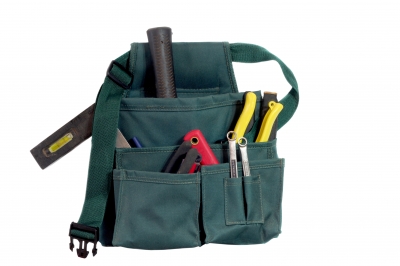
Image courtesy of Gualberto10 / FreeDigitalPhotos.net
I have two uncompleted afghans, two uncompleted scarves, one uncompleted dishcloth, an uncompleted shawl, and numerous other crochet projects that have been on hold for so long I no longer know what they are or where the pattern is I was following when I was working on them. I often get “hooked” (no pun intended) into crocheting a new pattern just for the thrill of creating something different, but when the newness wears off I sometimes abandon the project. Novelty must be one of my life’s strong allures, and, in fact, I think that attraction played a part in the relationships I have explored during my lifetime. It may even have played a part in my constantly seeking and exploring various religions.
I think I may just be trying to justify all my “unfinished business.” At the same time, however, there are benefits associated with prioritizing variety and new challenges over confining yourself to following a set way of doing the same thing forever and forever, amen. Seeking variety has introduced to new ideas, new ways of doing things, new people, new insights, and new experiences that I would have otherwise missed. The key issue here, for me, is discerning what is of value that I need to keep with me as I journey on to explore new avenues. It is almost as if I have spent my lifetime on a “scavenger hunt”—-a scavenger hunt in which the goals are not predetermined. Therefore, I don’t know what I am looking for until I find it and try it on to determine if it is a “comfortable fit.” If it is, it gets put in my “tool bag” and carried with me to future adventures. Along the way, of course, I find I have outgrown some of the “tools” in my bag and I exchange them for a newer, more effective “tool.”
Through the years I’ve collected tools like the ten commandments, the beatitudes, the Lord’s Prayer, and Christ’s commandment to love one another and do unto others as you would have them do unto you. Later, that latter “do unto” belief was bolstered by the Wiccan belief that whatever you do to others comes back to you threefold as well as by the concept of “karma” that I also stuffed in my tool bag. Some of the tools I have discarded are beliefs taught to me by fairy tales: that love is forever and that you will live happily ever after. I have discarded many beliefs I developed during childhood: that everyone is honest, that a spoken promise or commitment is better than a written contract, and that I should not question authority or be assertive or aggressive. And, of course there are the “big tools” I have discarded that almost killed me: the beliefs that drinking alcohol and eating were fun activities that “felt good,” and therefore, I should be able to drink and eat what I wanted, as much as I wanted, whenever I wanted.
Here are some of the new tools I’ve put in my bag: It is okay to say no, it is okay to express my own feelings and meet my own needs, not everything has an “ending” and some things you thought would never end do end. I have learned that pain and “being wounded” by some of life’s experiences are not necessarily bad things—-that they often lead to growth and newer, better outcomes. Pain can bring spiritual clarity, and being a wounded survivor can give you strength, insight, empathy, and heighten your ability to help others. Of course, over 32 years ago, I put AA’s 12 steps in my tool bag, and they are still there. However, I take them out periodically and refine them so they continue to be “new and useful” tools. My newest tool is one I find extremely useful: centering or contemplative prayer in which I consent to quietly seeking and receiving God’s unconditional love.
It took me all these words to realize what I am trying to say is life is not so much about “finishing something” as it is about evolving—-it is about process and not perfection. It is about the journey and not the destination. What tools have you discovered, picked up, or revised in your tool bag? What ones have you discarded? May God bless and keep you.
Image courtesy of BJWOK ,/ FreeDigitalPhotos.net
Yesterday, a friend asked me how to do a 4th step inventory when most of the wrong [in her life] was done by someone else. As far as I know, this was the first time this person had considered applying these steps to her own life. I found myself having real trouble trying to answer that question in a way that made sense and was helpful to someone with little or no exposure to twelve step recovery. Therefore, I am going to try to answer that question more effectively in today’s blog. I obviously need to figure out the answer for myself!
The 4th step involves looking at character defects/shortcomings we recognize in how we relate to ourselves, others, and God. Then we think about how these got started in our lives, what feelings or emotions seem to be at the root of them, and who or what we resent for the causative incident(s). We try to determine what “drive/defect/feeling” in us was associated with the resented incident/person. We look at the attitudes and behavior patterns that have shaped our lives—–not just our eating, drinking, gambling, etc.
However, when we look at patterns we often realize our own specific addictive behaviors or strongly linked to underlying problematic deep-rooted feelings or needs. We often eat or drink (etc.) seeking comfort and/or escape from our painful or uncomfortable emotions (fear, anger, distrust, etc.).
A lot of our 4th step inventory is about discovering how we have harmed/hurt ourselves because of all of the above. For many of us, our 5th step “amends” are “living amends” to ourselves accomplished by living according to the guidance of program principles and/or our faith—–the change in our behavior and attitudes demonstrates our transformation/progress in recovery. Sometimes our living amends are the best kind to make to ourselves and others because actions speak louder than words.
It is also important to look at our assets when we take our inventory. Specifically, we can look at the attitudes, emotions, and behaviors that are the opposite of those that are the “defects” we’ve just inventoried. Acknowledging our positive assets—-or our progress towards them—-helps us realize not only the good in our past but the transformation that is taking place in the present as we practice recovery principles.
If we find ourselves wondering, “What do I do when it is others that need to make amends to me?” we are taking someone else’s inventory other than our own. The key is looking at our own lives from a holistic perspective and not just focusing on a specific action like how I hurt someone when I over ate or drank too much. That can be included in our inventory, of course, but hopefully, a holistic, in-depth inventory will explore and acknowledge much more. This is important because the drinking, eating, etc. is often a “symptom” of our underlying problem(s), and doing this type of in-depth inventory does a better job of acknowledging and working through the underlying problems.
By the way, these twelve steps are actually a “recipe for living” that can help anyone transform their lives. That is one of the reasons I talked about them at length in today’s blog. For more help understanding what character defects and program principles actually are, I would refer my readers to the 2nd edition of “Drop the Rock: Removing Character Defects” by Bill P. Todd W. Sara S. and published in 2005 by Hazelden. God bless and keep you.

Photograph courtesy of Bob Towner
Yesterday a good friend rescued me from my “stuck in the house” doldrums. I was able to put attachable cleats on my shoes, walk across the snow and ice to his car, and then to walk out of his car and into the church for our centering prayer session. I felt like God came down, fitted me with wings, and let me fly out into the light again.
I tend to take my friends for granted, and it is not until times like this that I realize how much they mean to me. That same friend was able to use my cell phone to take a beautiful photo of God’s light streaming through one of our church’s stained glass windows right before our prayer session started, and the result was a photo I will treasure always. It will remind me not only of God’s love but the love that my friends have shared with me.
God has been working on me to more strongly anchor the concept of “willingness” into my heart. He did this yesterday by giving me lessons about my own willingness as well as how to introduce others to the concept of willingness. Yesterday my lessons led me to accept favors, to ask for help when I needed it, and to grasp an arm held out and offered for support in case I should start slipping on the ice. Yesterday also offered me opportunities to begin sharing my concept of willingness with another friend who is considering trying to use AA’s twelve steps for the first time to enter into recovery from carbohydrate addiction.
In looking back at yesterday, I have to wonder, once again, why is it so difficult for me to let others help me and so easy for me to focus instead on helping others? I am forced to admit it must involve my “false self”—my ego-centered pride. And below that layer of the onion is my more deeply centered issues of trust. Yesterday I trusted cleats, a friend, and God not to let me fall on the ice. This particular friend and God have been with me through many trials and tribulations; they have more than proven their trustworthiness. Why do I still have trust issues? I am like St. Peter who walks on water until he begins to be afraid. If I am not careful, I will allow my fears and insecurities to build a fortress that not only protects me but also imprisons me from the love and kindness of others. My fear, if fed, can even shut God out.
Happily, I learned yesterday that trusting God and friends can make all the difference in the world—and in my eternal reality. I got to be with other people of faith yesterday, and discussing our beliefs reaffirmed my faith and what it means to me. Had I stayed at home, my dogs would have continued to offer me unconditional love as they always do, but they cannot talk to me about matters of faith. It is even hard for them to let me be without interruption long enough to practice centering prayer. So, I am dedicating this blog to thanking my friend Bob, my other friends at Centering Prayer, my friend who let me talk about willingness, and, of course, God for freeing me from my self-imposed prison. May God bless and keep you.

Image courtesy of Idea go/ FreeDigitalPhotos.net
I have been sad the past couple of days because we had to close a twelve step women’s group due to lowering attendance and lack of women with long term recovery to lead the meetings. Part of my mourning is fed by my feeling guilty because I didn’t step up and try to rescue the group. Not that it is all about me, but I helped keep it afloat for years and had to stop due to health reasons. Now I want to jump in and try to “save” it, only I know I can’t over extend myself or I may be back in the hospital again. There are other groups, and recovery can be found in all of them—— it is just that this particular group was formed by women helping women and it lasted for longer than twenty years. It was my lifeline when I first moved to this area.
As I get older, it seems to me that life is trying to teach me that a big part of life is letting go of things. I don’t think it ever gets easy, but perhaps I am supposed to learn that all things “pass away” except my soul, the souls of others, and God’s loving spirit. But I don’t know what my life would be without “attachments”—-and I don’t mean the kind attached to a document. I mean the kind that are people, places, and things that are important in our lives. Right now I have a small white dog nestled close to each side of me as I type. I have a very strong and loving attachment with all four of my dogs, but I know we will not always be able to be together. I have buried both sets of grandparents, one parent, a step-son, and numerous friends, relatives, and pets. I know death is part of the cycle of life. Obviously, there is just part of me that does not want to accept that.
Oddly, I do not fear my own death. I have been surrounded by God’s love numerous time when I was close to dying. I always felt a calm, welcoming love at those times that left no room for anxiety. At those times when all other reality is swept away, it is easy to realize what matters is our soul and being embraced by God’s love. But now, today, my dogs bring comfort. I depend on my friends and family. Their love and support keep me going—-just like the unconditional love of my dogs keeps me going. I am not saying that kind of dependence is wrong or bad. I am just saying I need to realize any or all of it can be gone in a moment.
I’m beginning to think what is going on here is my life-long struggle of wanting to control and fighting the realization that I have no control. I have to accept that God is in control. When I do, at those times of surrender, I find a great deal of comfort to in realizing God has had control all along and will have control for all eternity. I have learned that if I stop fighting God’s control I find things turn out much better than they would have if I were still trying to control them. It is just a matter of exercising my “faith muscle.” I have to believe my dogs, my family, my friends, and my world will be just fine without me and I will be just fine without them when time or circumstance parts us as long as we are all connected by God’s love—–a love which cannot be bound by time or place. God bless and keep you.
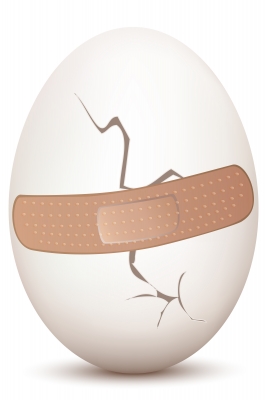
Image courtesy of digitalart/ FreeDigitalPhotos.net
I continually find myself in a position of wanting others to have what I have found. I want them instantly to understand the magic and meaning of a twelve step spiritual pathway, and I want them to know how they can restore themselves to a healthy, holistic lifestyle. When I listen and hear a remark about how unhealthily high someone’s blood sugar is, I want to tell them about a way to eat I have discovered that got my blood sugars in a normal range so that I was able to both lose weight and stop having to take diabetes medication. When those newly introduced to the twelve step program speak and give words to their newly emergent understanding of “the program” and “the steps” and what they mean——I want to interrupt them and teach them beyond their insight.
There are a lot of things “wrong” with my attitude when I let it wander in that direction. First of all, what I’ve learned, what works for me, is my insight, experience, strength, and hope and not necessarily anyone else’s. Beyond that, a spiritual pathway that works cannot be “programmed or fed into” someone; everyone must find their own way and their own truth.
Secondly, I need to look at my motivation for wanting to “set someone right.” Is it truly to help that person or am I merely trying to impress people so that I can feel important? That kind of self-centered motivation will not help anyone. Perhaps I truly want to save people the agony of having to learn life’s lessons the hard way; perhaps I want to save them from making the same mistakes I made so that their life will be “fully lived” now and they don’t have to wait until they are past fifty years old to begin to get a strong foothold in spirituality and wisdom.
If it were just as simple as telling people what they need to do to be “okay” followed immediately by those people following the advice they were given then, perhaps, many of us would not need to discover the twelve step process of evolving. People (parents, grandparents, and doctors) were shaking a finger in my face and telling me how I had to eat if I didn’t want to end up a diabetic like my mother from an early age. After all, they put me on my first diet at age four. I have always resisted authority and tend to want to do the opposite of what someone emphatically advises me to do. Being told or dictated what to do does not heal the spirit, and it does not solve the problem(s) behind whatever unhealthy or addictive symptom being addressed. One problematic behavior may be stopped only to be replaced by another. I replaced over-eating with excessive drinking. When I quit drinking, I replaced that with excessive smoking. I have been able to “let go” of those symptoms through the years, some more than once, but I know they and others are always “lurking in the shadows” waiting to bump me off the spiritual pathway of recovery.
So, when I want to “fix” or “speed up” someone else’s recovery, I need to remember recovery can only be given by God——provided one actively seeks it. The “way, how, and what” of each person’s recovery is between that individual and God. I need to be supportive and live my own spiritual program so that the twelve step process I am living is one that “attracts” rather than “promotes” because the twelve step way of life cannot be sold to anyone, it can only work by attracting others who see what they want and are willing to do what it takes to get it. May God bless and keep you.
 Living One Day at a Time